
Best time to visit Merzouga
Best Time to Visit Merzouga and the Erg Chebbi Dunes: A Month-by-Month Guide
When to go to Merzouga: temperatures, wind, crowds and light month by month, plus the best season for camel treks, camps and photography in the Sahara.
Travsus Admin
· 9 min de lectura
Este artículo aún no está disponible en tu idioma, por eso se muestra en inglés.
Merzouga is one of those places where the calendar matters more than the hotel. The same dunes that feel gentle and golden on a March evening can be punishing at three in the afternoon in July, and freezing at four in the morning in January. Choosing the right month is the single biggest decision you will make for a Sahara trip, more important than which camp you book or how many nights you stay.
This guide walks through the year month by month, explains the weather patterns that actually affect a desert trip (not just the averages), and ends with clear recommendations for different kinds of travellers: first-timers, photographers, families, hikers and people on a tight budget.
The short answer
For most travellers, the best time to visit Merzouga is from mid-September to mid-November and from late February to early May. In these windows days are warm rather than hot, nights are cool rather than cold, and the light on the dunes is soft for most of the day.
Best overall: October and March to April
Best for photography: November to February (clear, crisp air and long golden hours)
Best for budgets and quiet dunes: late January and early February, if you pack properly for cold nights
Months to think twice about: June, July and August, unless you plan your days around the heat
How the Sahara climate around Merzouga really works
Merzouga sits at roughly 700 metres above sea level on the edge of Erg Chebbi, a sea of sand dunes about 22 kilometres long and up to 5 kilometres wide, with the highest dunes rising around 150 metres. That altitude, combined with very dry air, creates a big gap between day and night temperatures. A 20-degree swing between the afternoon and the hour before sunrise is normal.
Three things shape your experience far more than the "average temperature" figures you see online:
The daily swing. Even in spring you will want a light jacket at night and sunglasses, a hat and sunscreen during the day.
Wind. The desert is rarely completely still. Most of the year the wind is light, but in spring there can be days of strong wind that lift sand into the air and hide the horizon.
The sun's angle. In winter the sun stays low, so the dunes glow for hours. In summer the light becomes flat and harsh for most of the day, and everything happens at dawn and dusk.
Merzouga month by month
January
January is the coldest month. Days are often pleasant, around 16 to 19°C in the sunshine, but nights can drop close to freezing. The sky is usually crystal clear, which makes it one of the best months for stargazing and for photographers who love long shadows across the dunes.
If you travel in January, choose a camp with proper bedding and heavy blankets, or upgrade to a heated tent. Bring a warm hat, a fleece and thick socks for the evening around the fire. In return you get quiet dunes, lower demand and some of the most beautiful light of the year.
February
February follows the same pattern as January, but the days start to lengthen and warm up. By the end of the month afternoons can feel like spring. It is an excellent month for travellers who want space: tour groups are still small and camps are rarely full outside school holidays. Nights remain cold, so the same packing advice applies.
March
March is the start of high season, and for good reason. Days are warm, around 22 to 25°C, and nights are cool but comfortable in a good camp. The oases around Merzouga and the palm groves of the Ziz and Todra valleys turn green, and the drive across the High Atlas is at its most spectacular, sometimes with snow still on the peaks.
The one caveat is wind. Spring is the season when sandstorms are most likely. Most days are fine, but it is wise to keep a little flexibility in your plans and not schedule your only desert night for the very last day of a tight itinerary.
April
April is many people's favourite month in the Moroccan south. It is warm without being hot, the evenings are perfect for dinner outside the tent, and sunsets are long and colourful. It is also busy: Easter holidays bring more travellers, so book your tour and camp a few weeks ahead.
May
May starts to tip towards summer. The first week or two can be ideal, but by the end of the month afternoon temperatures can reach the mid-thirties. Camel treks shift to the cooler hours, and you will appreciate a camp with shade and somewhere to rest after lunch. Early May is still an excellent choice; late May is good if you are comfortable with heat.
June
June is hot. Afternoons commonly reach 38 to 40°C, and the sand itself becomes too hot to walk on barefoot in the middle of the day. That does not make the desert impossible, but it changes the rhythm. A good summer trip is built around a very early start, a long rest through the heat of the day and the camel trek at sunset, when the air cools quickly.
July and August
These are the hottest months, with afternoon peaks that can exceed 45°C. Some travellers love the empty dunes and the warm nights, which are perfect for sleeping outside under the stars. Others find the heat exhausting. If your only chance to travel is in summer, a desert trip is still very doable if you follow a few rules:
Travel with air-conditioned transport and plan the long drives for the morning.
Do the camel trek at sunset and the sunrise walk early, and rest in the middle of the day.
Drink more water than you think you need, and add electrolytes.
Choose a camp with good shade and, if possible, fans or air-conditioned tents.
Summer is also when local families visit Merzouga for traditional sand baths, a remedy for joint and back pain in which people are partly buried in the hot sand for a few minutes. It is a fascinating local custom to see.
September
September is a transition month. The first half can still be hot, but the second half is often superb: warm days, clear skies and the first comfortable evenings after the summer. It is one of the best value months to travel, with good weather and fewer visitors than October.
October
October is arguably the perfect month for Merzouga. Daytime temperatures settle into the high twenties, nights are mild, the wind is usually calm and the light is golden. It is ideal for every kind of desert experience, from a single night in a camp to a multi-day camel trek. Expect more travellers and book ahead, especially around European school holidays.
November
November is cooler and quieter, with comfortable days and fresh nights. The air is often very clear after the summer haze, which makes the views from the top of the high dunes outstanding. It is a lovely month for photographers and for travellers who prefer calm.
December
December brings cold nights and pleasant days, much like January. The exception is the week between Christmas and New Year, which is the busiest period of the year in Merzouga. Camps organise festive dinners and New Year celebrations, and the best ones sell out weeks or months ahead. If you want to spend New Year's Eve in the Sahara, book early and pack warm clothes.
The best time for different travellers
First-time visitors
Choose October, early November, March or April. The weather is comfortable for every activity and the drive through the mountains and valleys is beautiful. A classic 3-day tour from Marrakech to Merzouga or a 2-day trip from Fes works perfectly in these months.
Photographers
Winter is underrated. From November to February the low sun gives long, soft light and deep shadows on the ripples of the sand, and the dry, cold air is perfect for night photography of the Milky Way. Plan your shots for the hour after sunrise and the hour before sunset, and bring spare batteries, since they drain faster in the cold.
Families with children
Spring and autumn holidays are ideal, with late March to April and October being the safest choice for comfortable temperatures. Children usually love the camel ride, sandboarding and the night around the fire. Avoid the hottest summer weeks with young kids, and pack warm layers for the evening.
Couples and honeymooners
For a romantic trip, the mild evenings of April, May, September and October make dinners under the stars unforgettable. A luxury desert camp with a private tent, a proper bed and an en-suite bathroom adds a lot of comfort, especially in the colder months.
Hikers and trekkers
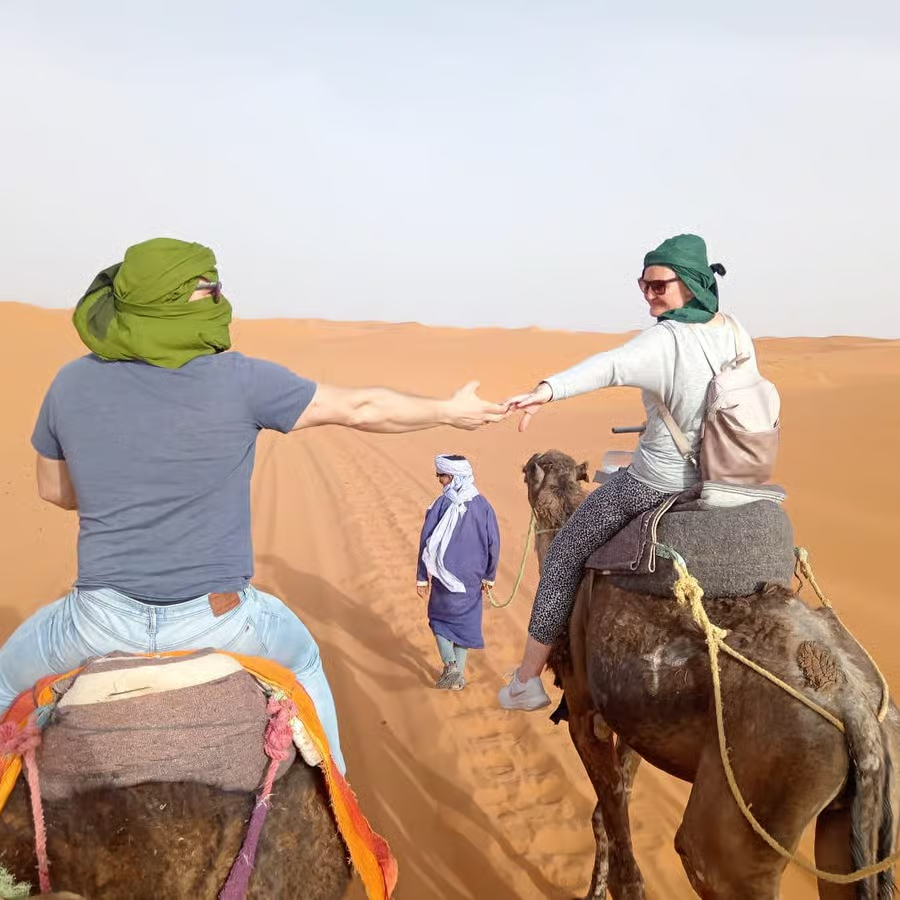
If you want to cross the dunes on foot or by camel for several days, go in October, November, February or March, when walking temperatures are comfortable all day. Longer treks such as an overnight camel trek with a sunset ride and sunrise are at their best in these months.
What to pack for each season
Year-round essentials
Sunglasses, a wide-brimmed hat or a scarf for the sun and wind
High-factor sunscreen and lip balm
A refillable water bottle
Comfortable shoes or sandals for the sand
A small torch or headlamp for walking around the camp at night
October to April
A warm fleece or down jacket for the evenings and early mornings
Long trousers and a warm hat for sunrise
Thick socks for sleeping
May to September
Light, loose, long-sleeved clothing that covers your shoulders and protects you from the sun
Electrolyte sachets
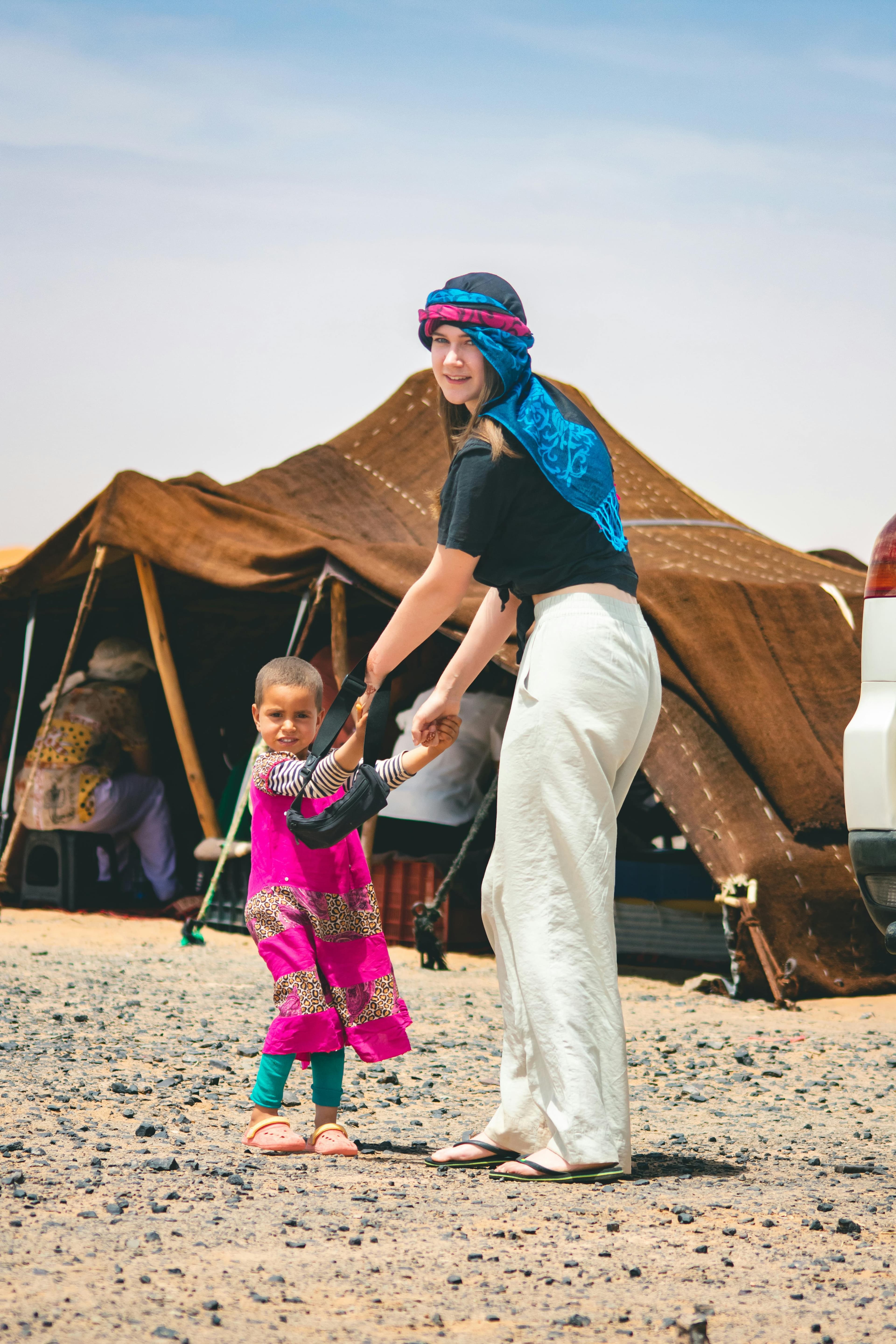
A cotton scarf, which local guides wear wrapped as a turban against the sun and sand
Ramadan and local holidays
Ramadan moves about eleven days earlier each year, following the lunar calendar. Travelling to Merzouga during Ramadan is perfectly possible: tours, camps and hotels operate normally and serve food to visitors. In small villages, some cafés close during the day, and evenings become lively after sunset when families break the fast. Being discreet about eating and drinking in public during the day is appreciated.
Common questions about the best time to visit Merzouga
What is the hottest month in Merzouga?
July is usually the hottest month, closely followed by August. Afternoon temperatures can go above 45°C, so trips in these months are organised around early mornings and evenings.
When are sandstorms most likely?
Strong winds and sandstorms are most common in spring, mainly in March and April. Most days are still calm, and a sandstorm usually lasts a few hours rather than days.
Is it cold in the Sahara at night?
Yes, from November to February nights can drop close to 0°C. Good camps provide heavy blankets, and luxury camps often have heated tents. In spring and autumn the nights are cool and comfortable.
Can I visit Merzouga in summer?
Yes. Summer trips are quieter and the warm nights are perfect for sleeping under the stars. Plan the drives and activities for the early morning and the evening, choose air-conditioned transport and drink plenty of water.
How many nights should I spend in the desert?
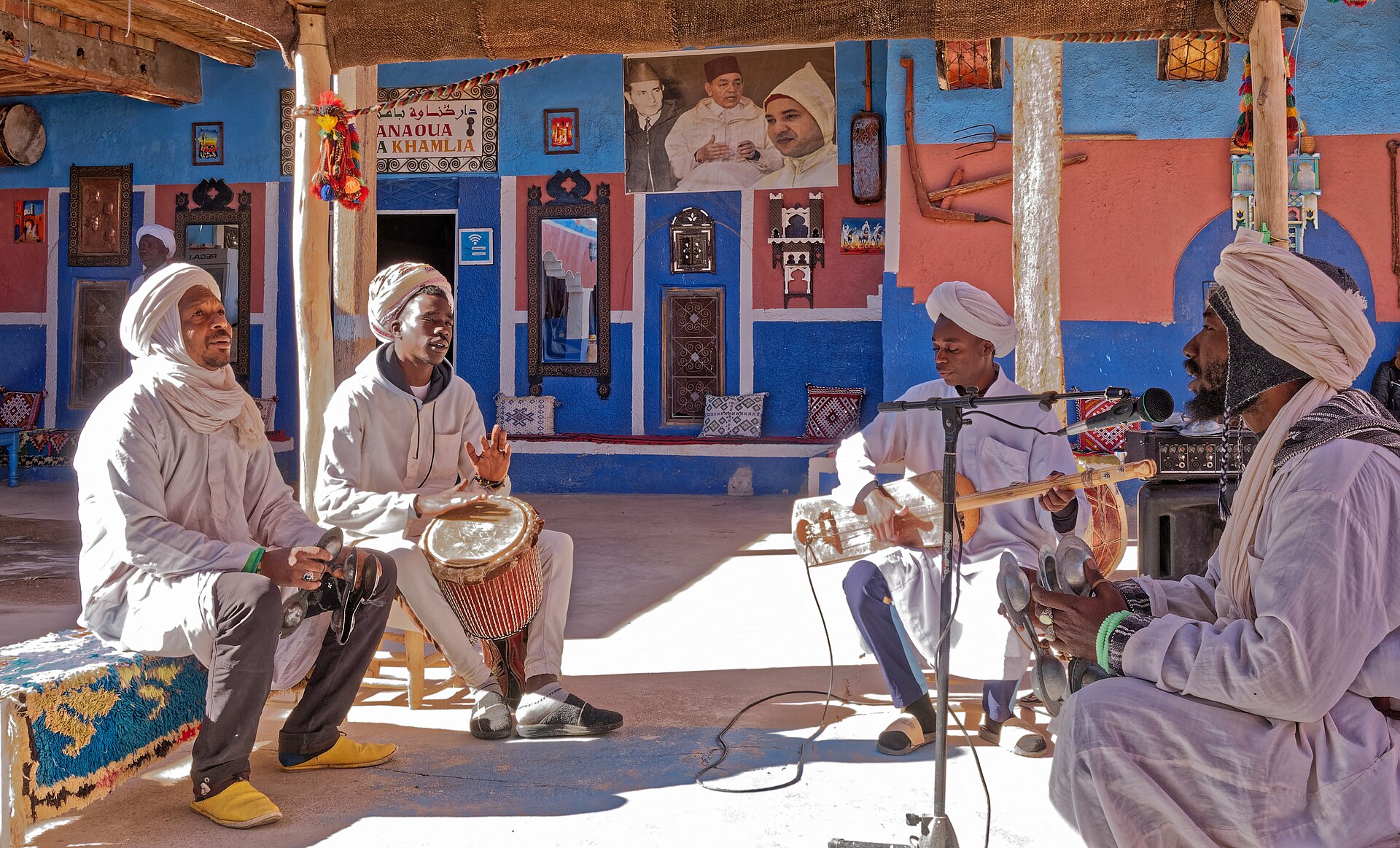
One night is enough to see a Sahara sunset and sunrise. Two nights let you enjoy a full day around Erg Chebbi, with a visit to a nomad family, the Gnawa musicians of Khamlia or a 4x4 tour, at a relaxed pace.
Plan your Sahara trip
Whatever month you choose, the Sahara rewards travellers who plan around the light and the temperature rather than the clock. Tell us when you are travelling, and we will build a private itinerary that puts you on the dunes at the best hours of the day, with a camp that suits the season. Start by browsing our desert tours from Marrakech and from Fes, or contact our team for a tailor-made plan.
- Best time to visit Merzouga
- Merzouga weather
- Erg Chebbi
- Sahara desert Morocco
- Morocco travel tips
- Merzouga camel trek
- Desert camp Morocco