
Is Merzouga safe
Is Merzouga Safe? A Practical Safety Guide to the Sahara for Travellers
Is Merzouga safe for tourists, families and solo women? Real risks in the Sahara (heat, getting lost, roads, scams) and simple ways to avoid them.
Travsus Admin
· 8 Min. Lesezeit
Dieser Artikel ist noch nicht in Ihrer Sprache verfügbar und wird daher auf Englisch angezeigt.
Merzouga is a small village of mud-brick houses and guesthouses at the foot of the Erg Chebbi dunes, and it welcomes visitors from all over the world every day of the year. For the vast majority of travellers the honest answer to "is Merzouga safe?" is yes: crime against tourists is rare, local people are welcoming, and the camps and guides depend on visitors feeling secure.
That said, the Sahara is a real desert, and the risks you should think about are mostly natural ones: heat, sun, getting lost in the dunes and long drives on mountain roads. This guide explains each of them clearly and gives simple, practical advice, so you can enjoy the desert with peace of mind.
Crime and personal safety
Violent crime against tourists in the Merzouga area is very unusual. The village lives from tourism, and people know each other. The issues you are more likely to meet are small ones:
Persistent selling. Fossil sellers, souvenir stalls and unofficial guides may approach you. A polite "la, shukran" (no, thank you) and a smile are enough.
Unclear prices. If you book activities on the spot, agree on the price, what is included and the duration before you start.
Pickpocketing. It is rare in Merzouga itself, but keep valuables close in crowded places along the way, such as busy markets in Rissani or the big cities.
As anywhere, keep your passport and spare money in your accommodation or a hidden pouch, carry a copy of your passport, and avoid displaying expensive jewellery or large amounts of cash.
The Algerian border
Merzouga lies close to the border with Algeria, which has been closed for decades. The border area is a military zone, and you should never try to drive or walk towards it. In practice this is not something visitors need to worry about: camps, treks and 4x4 tours stay in the well-known areas around Erg Chebbi, and you will occasionally see army or gendarmerie checkpoints on the roads, which are routine. Keep your passport with you when travelling between towns.
Heat, sun and dehydration
The biggest danger in the Sahara is not people, it is the climate. In summer, afternoon temperatures can exceed 45°C, and even in spring the sun is intense.
Drink water regularly, before you feel thirsty. In hot months, aim for three to four litres a day.
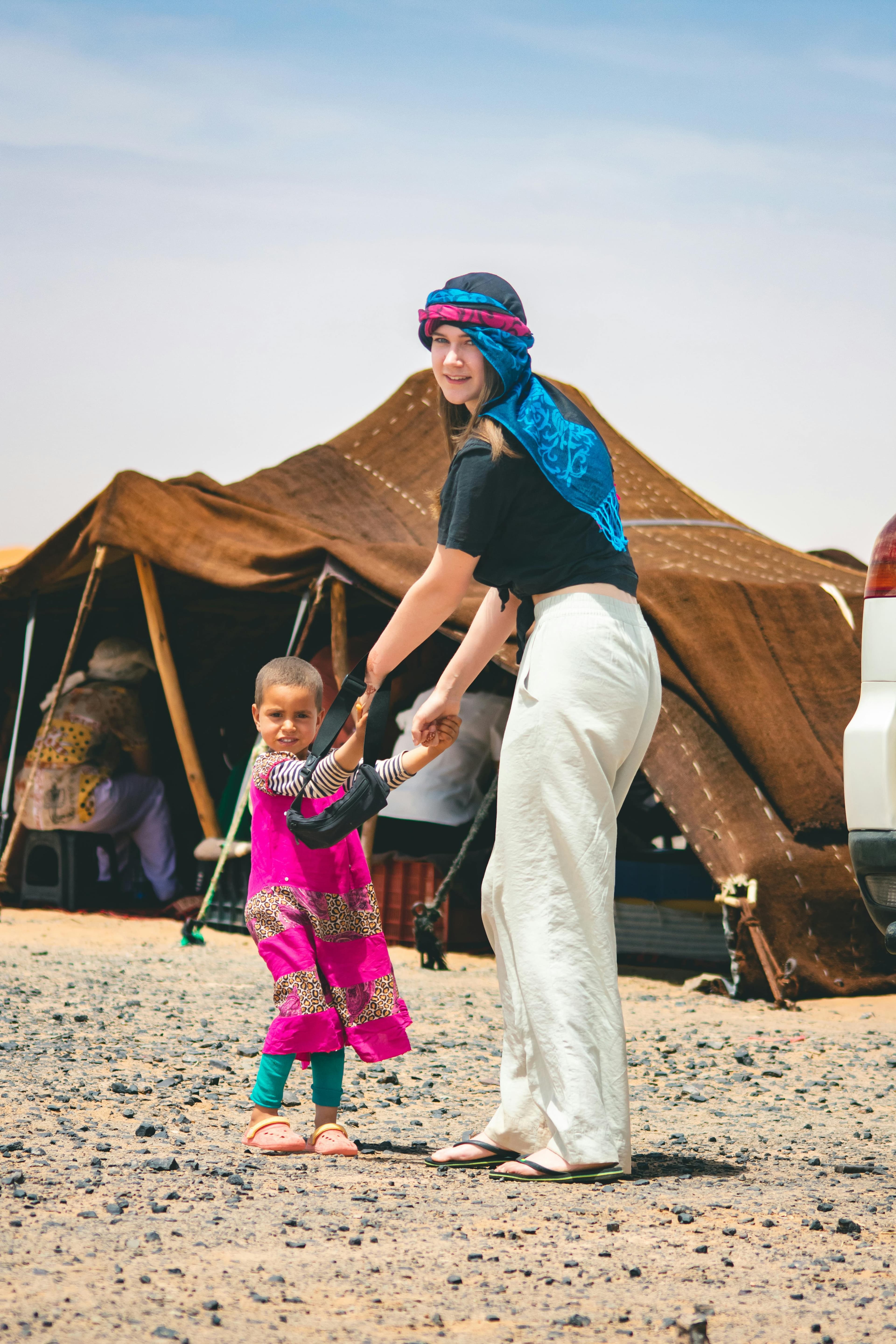
Wear a hat or a scarf, sunglasses and loose, light clothing that covers your shoulders.
Use high-factor sunscreen and reapply it, especially on your face, ears and neck.
Plan activities for the early morning and the evening in summer, and rest in the shade at midday.
Know the signs of heat exhaustion: headache, dizziness, nausea, unusual tiredness. Stop, find shade, drink and cool down.
Cold nights
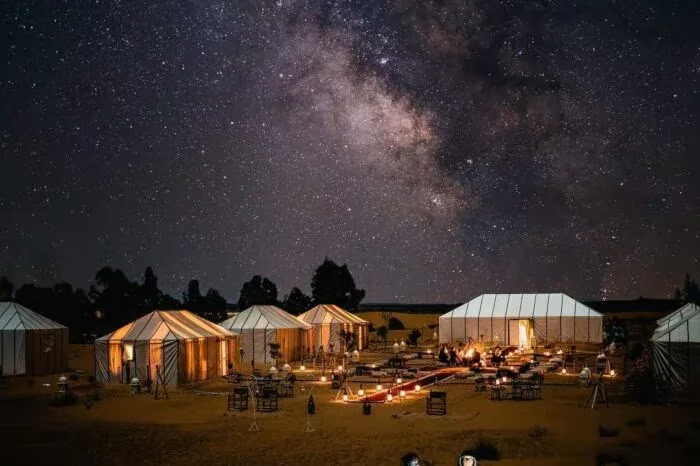
From November to February, nights in the desert can drop close to freezing. Good camps provide heavy blankets, and many luxury camps have heated tents. Bring a warm jacket, a hat and socks for the evening and for sunrise.
Getting lost in the dunes
Erg Chebbi looks small on a map, but once you walk a few hundred metres into the dunes, every direction looks the same. Each year a few visitors overestimate their sense of direction.
Do not walk into the dunes alone, especially in the afternoon heat or after dark.
If you go for a short walk from your camp, keep the camp in sight and tell someone where you are going.
Carry water and a charged phone. Mobile coverage is surprisingly good around Erg Chebbi, but not everywhere.
For longer explorations, go with a local guide. Guides read the dunes like streets.
Camels, quads and 4x4s
Camel rides
Camel treks are safe and suitable for most people, including children. Hold on firmly when the camel stands up and sits down, since these are the only moments when you can lose your balance. Tell your guide if you are nervous or have back problems; they can walk beside you or offer a shorter ride.
Quad biking and buggies
Quad biking on the dunes is fun, but it is also where most minor accidents happen. Choose a reputable operator, wear the helmet provided, follow the guide's track and do not race on the crests of high dunes, where the sand can drop away suddenly. A guided quad tour with a local operator is the safest way to enjoy it.
4x4 tours
A 4x4 tour around Erg Chebbi, to Khamlia, the nomad areas and the old mines, is safe with an experienced local driver. Avoid self-driving in deep sand unless you have real off-road experience: getting stuck is common, and rescue can take time. Our 4x4 desert tour is driven by locals who know every track.
Sandstorms and flash floods
Strong winds can lift sand into the air, mostly in spring. A sandstorm is uncomfortable rather than dangerous if you take shelter: stay in your tent or vehicle, protect your eyes and nose with a scarf, and wait. Most storms pass within a few hours.
Rain is rare, but heavy storms occasionally cause flash floods in dry riverbeds. Never camp or park in a dry riverbed, and follow local advice after heavy rain.
Scorpions, snakes and other wildlife
Scorpions and snakes live in the desert, but encounters are very rare, especially in established camps. They are mostly active in hot months and at night.
Shake out your shoes and clothes in the morning.
Use a torch when walking around at night.
Do not put your hands under rocks or into holes.
Road safety
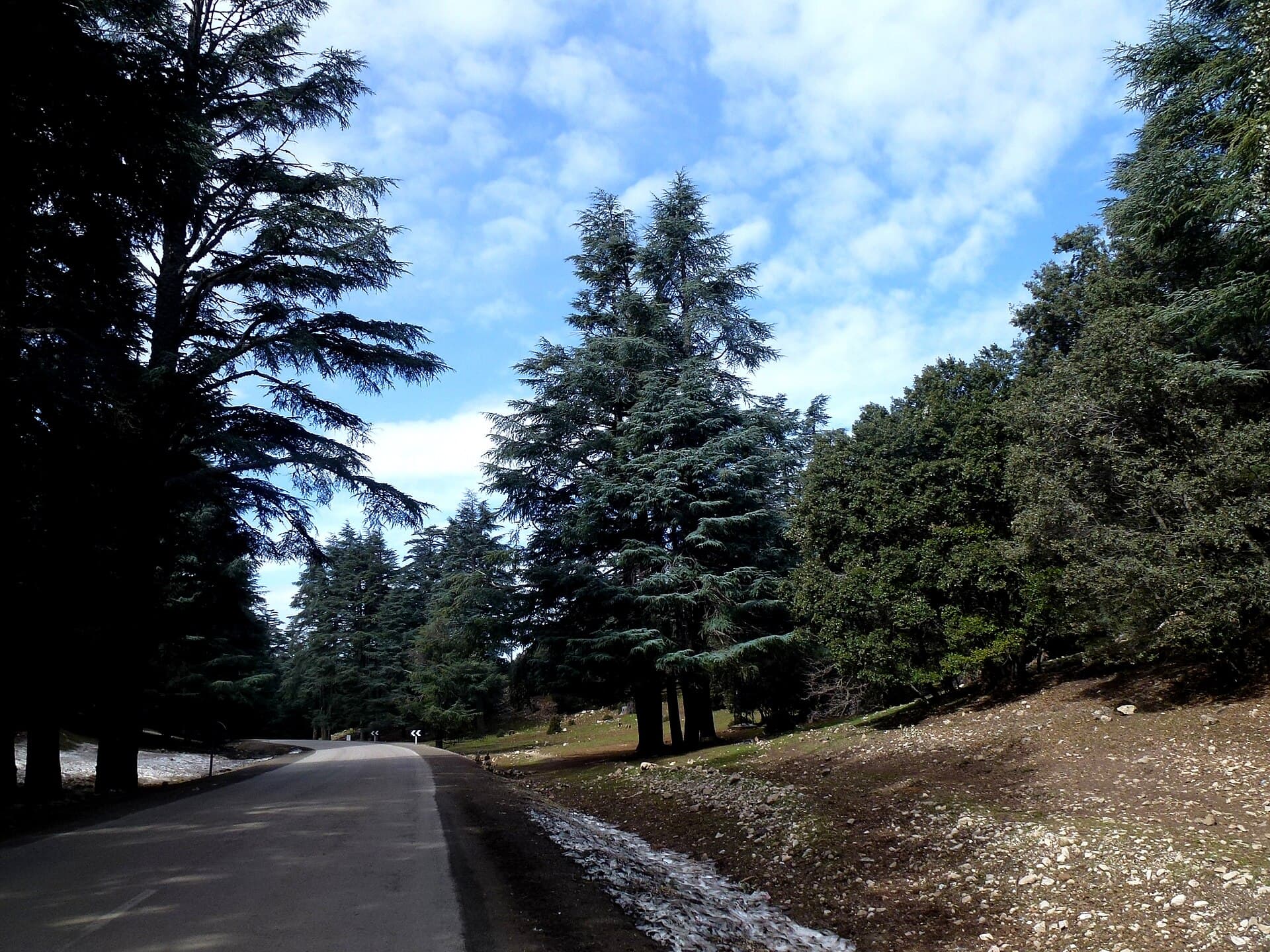
The roads to Merzouga cross the High Atlas, including the Tizi n'Tichka pass, with long climbs and sharp bends. Driving in Morocco requires attention: other drivers overtake boldly, and animals and people use the road. If you are not used to mountain driving, the safest option is to travel with an experienced private driver, either on a guided tour or with a private transfer from Marrakech to Merzouga. Avoid driving at night outside the cities.
Safety for solo women
Many women travel alone to Merzouga and have a wonderful experience. Moroccan hospitality is strong, and camp staff are used to looking after guests. A few tips make the trip smoother:
Dress modestly in villages: shoulders and knees covered is respectful and draws less attention.
Book your camp and transport with a known company rather than with people who approach you in the street.
Be clear and firm if someone is too insistent; you do not owe anyone a conversation.
Share your itinerary with someone at home.
Health and food
Drink bottled or filtered water rather than tap water.
Food in camps is usually cooked fresh, and tagines are slow-cooked, which makes them a safe choice.
Bring a small first-aid kit with plasters, rehydration salts, painkillers and any personal medication.
Make sure your travel insurance covers activities such as camel riding and quad biking.
Useful emergency numbers in Morocco
Police (cities): 19
Royal Gendarmerie (rural areas): 177
Ambulance and fire: 15
From a mobile phone, 112 also works
Save the phone number of your camp and your tour company, and keep it with you.
Before you go: practical preparation
A little preparation at home removes most of the stress on the road.
Travel insurance: choose a policy that covers medical evacuation and activities such as camel riding, quad biking and trekking.
Copies of documents: keep a photo of your passport and insurance on your phone and a paper copy in your bag.
Money: Merzouga has very few ATMs, and many small places only accept cash. Withdraw dirhams in a larger town such as Marrakech, Fes, Ouarzazate or Errachidia before you arrive.
Phone: buy a local SIM card on arrival in Morocco. Coverage on the main roads and around Erg Chebbi is generally good, and it lets you call your driver or camp if needed.
Motion sickness: the mountain roads over the High Atlas have many bends. If you are sensitive, sit in the front, look at the horizon and take medication before the pass.
Medication: bring enough of any personal medication for the whole trip, since pharmacies in small villages have limited stock.
Quick safety checklist
Book your tour, camp and transfers with a reputable company.
Travel with a private driver if you are not experienced on mountain roads.
Protect yourself from the sun and drink plenty of water.
Never walk into the dunes alone after dark.
Wear a helmet and stay with the guide on quads.
Pack warm clothes for winter nights.
Keep your passport and your camp's phone number with you.
Frequently asked questions
Is Merzouga safe for families with children?
Yes. Families visit all year round. Children enjoy camel rides, sandboarding and the camp atmosphere. Watch them on the high dunes, protect them from the sun, and choose spring or autumn for the most comfortable temperatures.
Is it safe to sleep in a desert camp?
Yes. Camps are staffed day and night, and the teams are used to looking after guests. Lock valuables in your bag and keep a torch next to your bed.
Is Merzouga safe to visit right now?
Merzouga is a well-established tourist destination that welcomes visitors year-round. As for any trip, check your government's travel advice before you go and follow local guidance during your stay.
Do I need a guide in Merzouga?
You do not need a guide in the village, but you should have one for camel treks, longer walks in the dunes and any off-road driving. A good guide makes the experience both safer and richer.
Travel with confidence
Merzouga is one of the most magical places in Morocco, and with a little preparation it is also a very safe one. Our private tours include experienced local drivers, trusted camps and guides who know the dunes, so you can focus on the sunset rather than on logistics. Explore our overnight camel trek in Merzouga or contact us for a private itinerary.
- Is Merzouga safe
- Sahara safety
- Morocco travel safety
- Merzouga desert
- Solo female travel Morocco
- Morocco travel tips
- Erg Chebbi