
Marrakech to Merzouga
Marrakech to Merzouga: Bus, Car or Tour? Full Guide
Marrakech to Merzouga by bus, car, private driver, tour or flight: costs, travel times, best overnight stops and practical tips compared.
TRAVSUS
· 14 min read
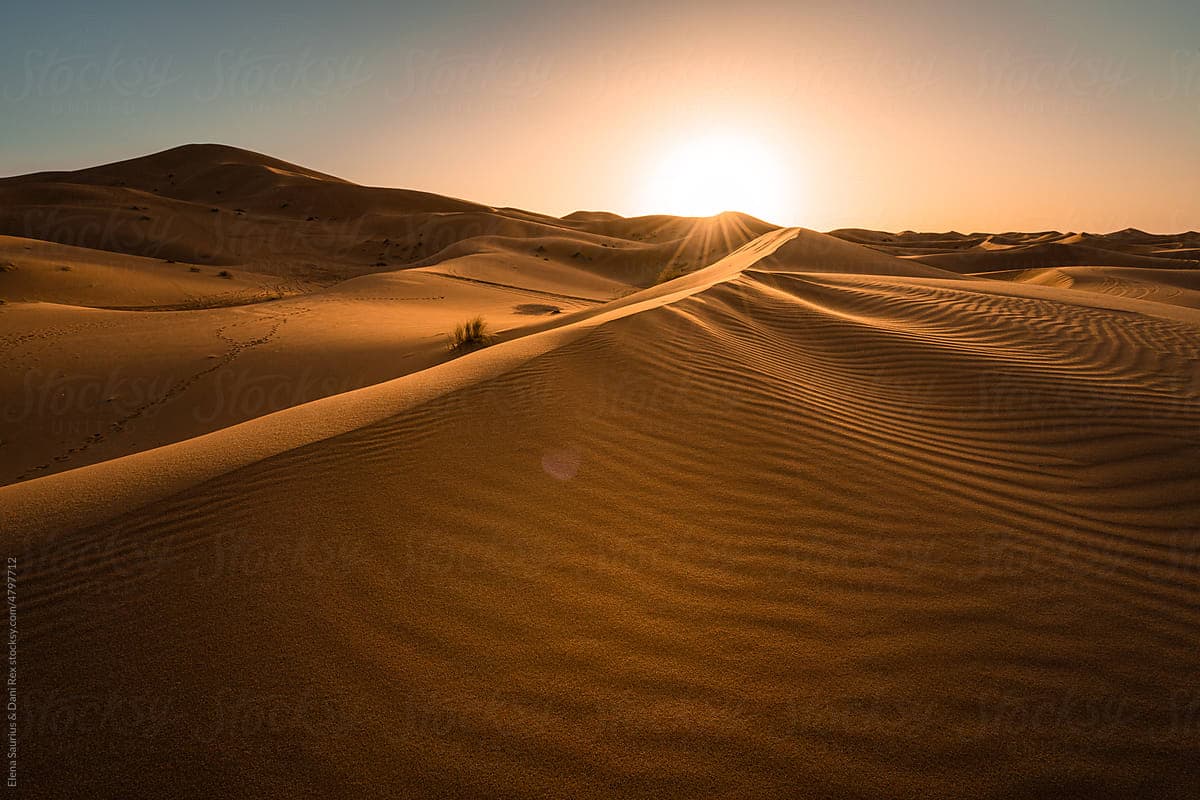
Few journeys in Morocco are as memorable as the road from Marrakech to Merzouga. In a single trip you leave the palm-fringed Red City, climb over the High Atlas mountains, descend into a land of kasbahs and river oases, and finally arrive at the edge of the Sahara, where the orange dunes of Erg Chebbi rise up to around 150 metres above the desert floor. It is also a long journey: roughly 560 kilometres and the better part of a day on the road, whichever way you choose to travel.
That is why so many travellers ask the same question before booking: what is actually the best way to get from Marrakech to Merzouga? Should you take the overnight bus, rent a car and drive yourself, hire a private driver, join a shared group tour or book a private desert tour? Is flying worth it? In this guide we compare every realistic option, with approximate costs, travel times, comfort and flexibility, plus advice on where to stop overnight, when to go and how to stay safe on the road.
Marrakech to Merzouga at a glance
Distance: approximately 550–560 km by road.
Main route: N9 from Marrakech over the Tizi n'Tichka pass to Ouarzazate, then the N10 east through Skoura, Kalaat M'Gouna, Boumalne Dades and Tinghir, and on to Errachidia or Tinejdad, Erfoud and Rissani before the final stretch to Merzouga.
Pure driving time: around 9–10 hours without long stops; most people take 2 days or more to enjoy the scenery.
Bus: roughly 12–13 hours, usually with an overnight departure; often the cheapest option.
Highest point: the Tizi n'Tichka pass at about 2,260 m.
Best overnight stops: Ait Ben Haddou, Ouarzazate, the Dades Valley or the Todra Gorge.
Best months: March to May and late September to November.
Nearest airport to Merzouga: Errachidia (about 130 km away); Ouarzazate is a second option further west.
Understanding the route from Marrakech to Merzouga
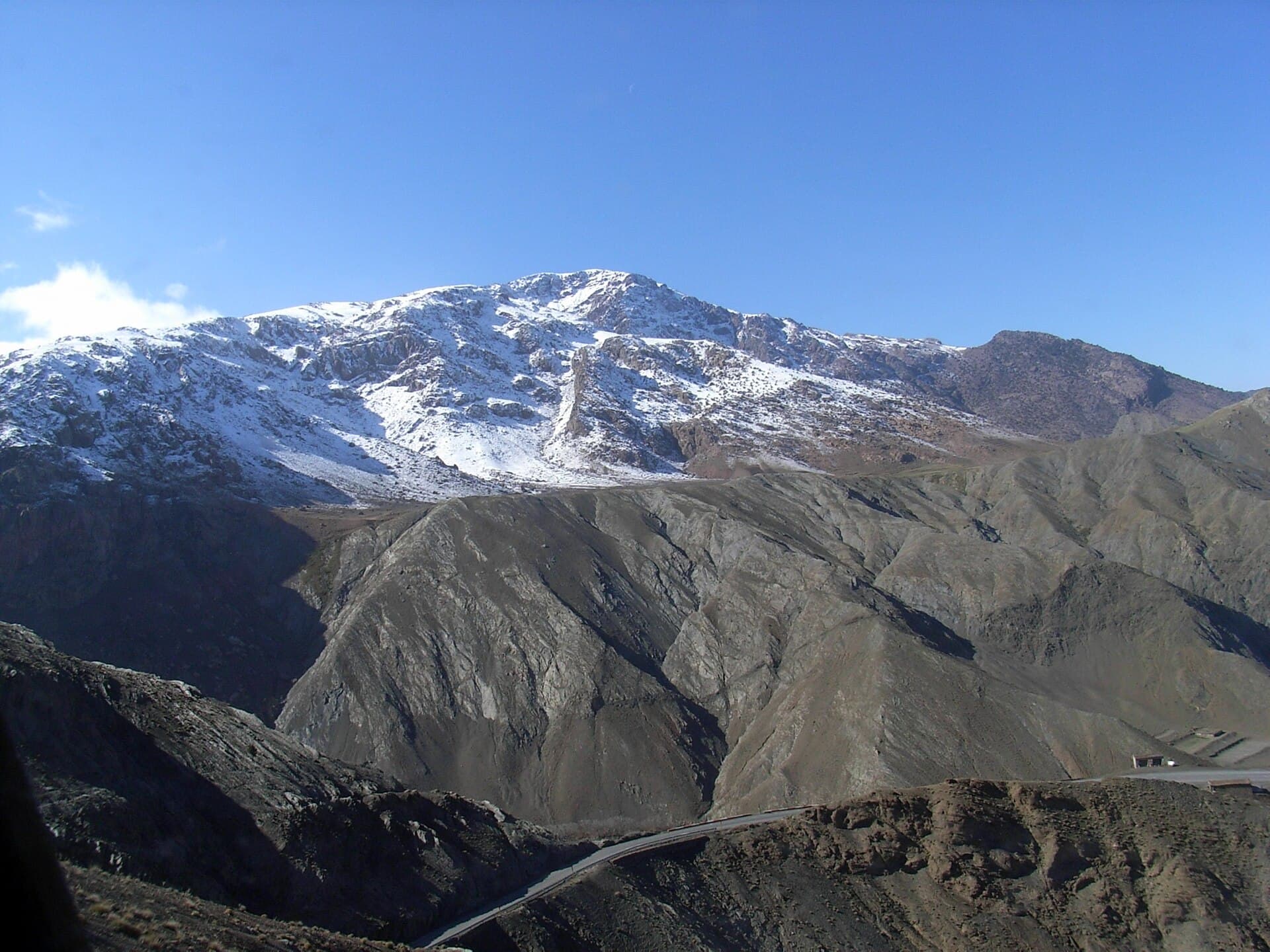
Before comparing transport options, it helps to understand the road itself, because it shapes every choice you make. From Marrakech, the N9 heads south-east through the foothills and then climbs into the High Atlas. The road over the Tizi n'Tichka pass is fully paved and has been widened and improved in recent years, but it remains a mountain road with many bends, slow trucks and occasional roadworks. Expect around 3.5–4 hours to reach Ouarzazate, including a short break.
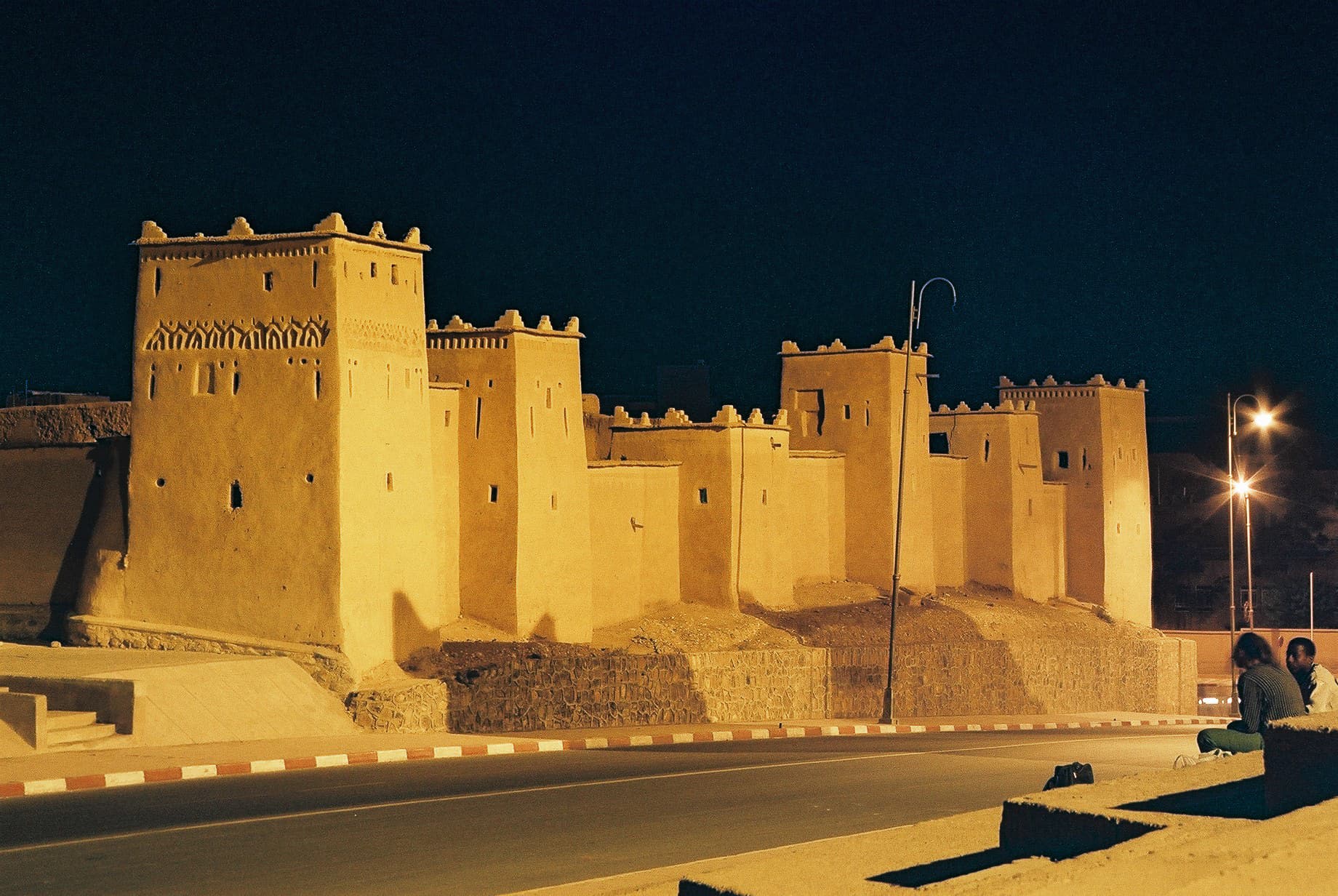
On the far side of the mountains the landscape changes completely. Ouarzazate, the so-called gateway to the desert, is home to film studios and the Taourirt kasbah, and just off the main road lies the UNESCO-listed ksar of Ait Ben Haddou. From Ouarzazate, the N10 runs east along what is often called the Road of a Thousand Kasbahs, through the rose-growing area around Kalaat M'Gouna, the entrance to the Dades Valley at Boumalne Dades, and the oasis town of Tinghir, gateway to the Todra Gorge.
After Tinghir there are two common ways to continue: east via Tinejdad towards Erfoud (often the shorter option), or further along the N10 to Errachidia and then south on the N13 through the Ziz Valley to Erfoud. From Erfoud a good road leads to Rissani and finally to Merzouga, a small village sitting right beside the dunes of Erg Chebbi.
Option 1: Bus from Marrakech to Merzouga (Supratours and CTM)
The bus is the budget traveller's favourite. The two best-known national companies are Supratours (linked to the national rail operator ONCF) and CTM. Both have operated services between Marrakech and the Merzouga area, typically with stops in Ouarzazate, Tinghir, Errachidia, Erfoud and Rissani. Routes and timetables change from season to season, so always check the latest schedule directly with the companies or at their stations a few days before you travel.
Duration, price and schedule
Duration: usually around 12–13 hours, sometimes longer with delays.
Approximate price: often in the range of 200–300 MAD (roughly €20–30) per person one way, plus a small fee for large luggage.
Departures: the classic option is an evening or night departure arriving in Merzouga early in the morning, though daytime departures have also been offered at times.
Pros and cons of the bus
The advantages are clear: it is cheap, reasonably comfortable, air-conditioned on most coaches, and the overnight service saves you the cost of a hotel. On the other hand, you will see very little of the spectacular scenery if you travel at night, sleep is often broken by stops and mountain bends, and arriving at dawn means you may need to wait before checking in. Seats sell out in high season and around Moroccan holidays, so book ahead where possible.
Tip: if you take the night bus, ask your accommodation in Merzouga in advance whether they can arrange an early pickup and a place to rest.
Option 2: Rental car and self-drive
Driving yourself from Marrakech to Merzouga is entirely possible and very rewarding for confident drivers. The roads are paved all the way, signposting is in Arabic and French (often with Latin script), and you have total freedom to stop for photos, lunch in a kasbah or a detour into a gorge.
Route and driving time
The standard itinerary is Marrakech – Tizi n'Tichka – Ouarzazate – Skoura – Kalaat M'Gouna – Boumalne Dades – Tinghir – Tinejdad or Errachidia – Erfoud – Rissani – Merzouga. The total is about 550–560 km and 9–10 hours of actual driving. Doing it in one day is tiring and not recommended; splitting it over two or three days transforms the trip.
Practical tips for self-drivers
Rental costs: a small economy car can cost roughly €25–50 per day depending on season, with SUVs costing more. One-way rentals (for example Marrakech to Fes) usually add a drop-off fee.
Fuel: fill up in Marrakech and again in Ouarzazate, Tinghir or Errachidia. Stations are frequent in towns but sparse in some stretches. Diesel prices fluctuate, so check current rates.
Police checks: checkpoints are common, especially at town entrances. Slow down, be polite, and keep your passport, licence, rental papers and insurance documents to hand. Many visitors carry an International Driving Permit as well.
Speed limits: typically 40–60 km/h in towns and up to 100 km/h on national roads. Speed cameras and radar checks are frequent, and on-the-spot fines are common.
Mountain roads: the Tizi n'Tichka has tight bends, heavy trucks and occasional fog or snow in winter. Overtake only with clear visibility and avoid driving the pass in the dark.
Night driving: avoid it where possible. Unlit roads, pedestrians, donkeys, cyclists without lights and wandering livestock are real hazards.
Parking at the dunes: most hotels and camps near Erg Chebbi offer secure parking. If you are staying in a desert camp inside the dunes, you will normally leave the car at the partner hotel and continue by camel or 4x4. Do not drive a normal rental car onto the sand.
Offline maps: download maps before you leave, as mobile coverage can drop in the mountains.
Option 3: Private driver
Hiring a car with a professional driver combines the freedom of self-drive with the comfort of being driven. You decide where and when to stop, while an experienced local handles the mountain roads, the checkpoints and the navigation. Drivers also know the best viewpoints and lunch spots.
Costs vary with the vehicle (car, 4x4 or minivan), the number of days and the season. As a rough guide, a private vehicle with driver for a multi-day trip can cost from a few hundred euros per vehicle, which becomes very good value when shared between a family or group of friends. Make sure you confirm what is included: fuel, the driver's food and accommodation, tolls, and whether the price is per person or per vehicle.
Option 4: Shared group tour
Shared tours are the most popular way to reach Merzouga from Marrakech for solo travellers and backpackers. The typical format is a 3-day, 2-night trip: day one over the Atlas to Ait Ben Haddou and the Dades Valley, day two through the Todra Gorge to Merzouga with a camel ride at sunset and a night in a desert camp, and day three either back to Marrakech or on to Fes.
Approximate price: often around €80–200 per person, depending on camp standard and inclusions.
Pros: cheap, social, no planning required, transport and accommodation included.
Cons: large minibuses, fixed schedules, long days, limited time at each stop, and you share the pace with the whole group.
Entrance fees, local guides, lunches and drinks are often extra.
Option 5: Private desert tour
A private tour is the most comfortable and flexible way to travel from Marrakech to Merzouga. You get your own vehicle and driver, a tailored itinerary and accommodation chosen to match your budget, from charming riads and kasbah hotels to luxury desert camps with private bathrooms. You can start whenever you like, add extra nights, include a hike in the Todra Gorge or a walk through the palm groves of Skoura, and finish in Marrakech, Fes or elsewhere.
Prices depend on group size, the number of days and the comfort level you choose. For families or small groups, the difference per person compared with a shared tour can be surprisingly small.
Option 6: Flight to Errachidia (or Ouarzazate) plus transfer
If you are short on time, flying can cut out the long mountain drive. Errachidia's Moulay Ali Cherif airport is the closest airport to Merzouga, roughly 130 km or about 2 hours away by car. Ouarzazate airport is another possibility, but it leaves you around 360 km from the dunes. Flights to these regional airports are limited and often route via Casablanca rather than departing directly from Marrakech, so a door-to-door journey can still take most of a day once connections are counted.
You will need to arrange a transfer from the airport to Merzouga in advance, as public transport from the airport is limited. Check current routes and schedules with the airlines, as they change frequently.
Option 7: Grand taxi
Grand taxis are shared long-distance taxis that leave when full. There is no single grand taxi from Marrakech to Merzouga; instead you would chain several legs, for example Marrakech to Ouarzazate, Ouarzazate to Tinghir, Tinghir to Errachidia or Erfoud, then on to Rissani and Merzouga. It is cheap per leg and an authentic local experience, but it is slow, cramped (traditionally six passengers in an older saloon car) and unpredictable.
Comparison: which option is best for you?
Bus: cost very low (about €20–30) · time 12–13 h · comfort basic to fair · flexibility low.
Rental car: cost low to medium (rental, fuel, fees) · time 9–10 h of driving, ideally over 2 days · comfort good · flexibility very high, but you do all the driving.
Private driver: cost medium to high per vehicle · time 9–10 h, usually over 2–3 days · comfort high · flexibility very high.
Shared group tour: cost low to medium per person · time 3 days with fixed stops · comfort fair · flexibility low.
Private tour: cost medium to high · time 2–4 days or more at your pace · comfort very high · flexibility very high.
Flight plus transfer: cost medium to high · time often most of a day with connections · comfort good · flexibility limited by flight schedules.
Grand taxi: cost low · time long and unpredictable · comfort low · flexibility medium.
In short: choose the bus if your budget is tight, a rental car if you love driving and independence, a shared tour if you travel solo and want simplicity, and a private tour or private driver if you want comfort, safety and time to enjoy the journey.
Where to stop overnight between Marrakech and Merzouga
Breaking the journey is the single best decision you can make. It turns a gruelling day in a vehicle into one of the highlights of your trip to Morocco.
Ait Ben Haddou
Just about 4 hours from Marrakech, this fortified earthen village is one of the most photographed places in the country and has appeared in many films and TV series. Staying overnight lets you explore it at sunrise or sunset, when the light turns the walls gold and the day-trip crowds are gone.
Dades Valley
The Dades Valley offers dramatic rock formations, green riverside gardens and the famous zigzag road climbing above the gorge. It sits roughly halfway between Marrakech and Merzouga, which makes it the most popular overnight stop.
Todra Gorge
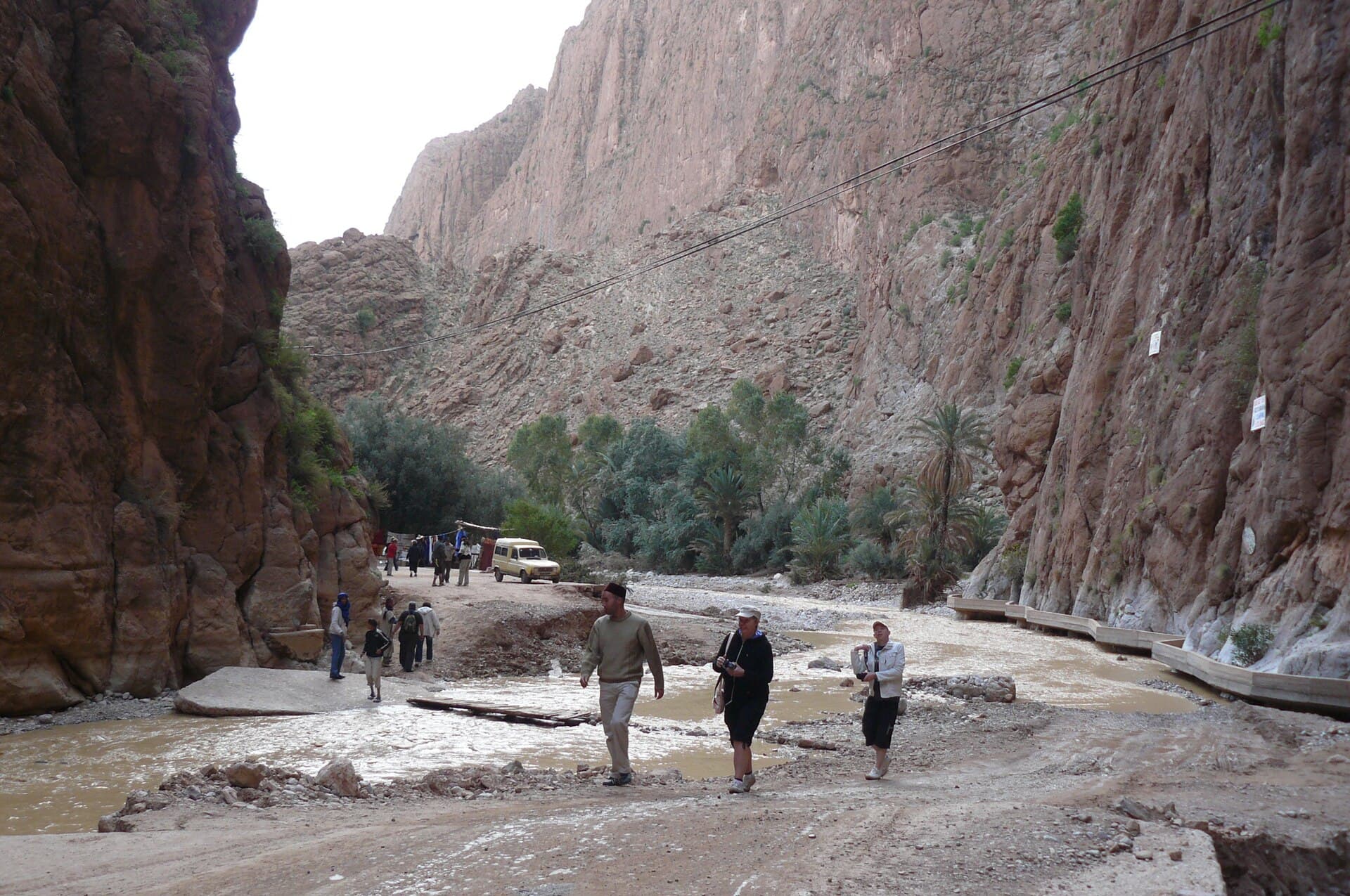
Near Tinghir, the Todra Gorge narrows to a dramatic canyon with walls rising some 300 metres. It is wonderful for short walks and longer hikes, and staying nearby means you can visit early, before tour buses arrive, and continue to Merzouga with a shorter drive the next day.
Best time to travel from Marrakech to Merzouga
Spring (March to May) and autumn (late September to November) are ideal: pleasant daytime temperatures, cool nights in the desert and clear skies. Winter (December to February) brings sunny days but cold nights, sometimes close to freezing in the desert, and snow can occasionally close or slow the Tizi n'Tichka pass for a few hours. Summer (June to August) is very hot in the Sahara, often well above 40°C in the afternoon, so plan your camel ride for early morning or sunset and avoid driving in the hottest hours. Note that sandstorms can occur, particularly in spring.
Budget overview
Bus ticket: about 200–300 MAD (€20–30) one way.
Rental car: roughly €25–50 per day for an economy car, plus fuel for around 1,100 km if you return to Marrakech.
Shared 3-day tour: often €80–200 per person.
Private tour: varies widely with group size and accommodation; ask for a personalised quote.
All figures are approximate and change with season, demand and exchange rates, so always confirm current prices before booking.
What to pack for the trip
Layers: a warm jacket for the Atlas and desert nights, even in spring and autumn.
A scarf or cheche to protect your face from sun and sand.
Sunglasses, sunscreen and a hat.
Comfortable closed shoes for walking in the gorges, and sandals for the dunes.
A small day bag for your night in the desert camp, so you can leave large luggage in the vehicle or hotel.
Cash in dirhams, since card payment is not accepted everywhere along the route.
Motion sickness tablets if you are sensitive to mountain bends.
Safety and cultural tips
The Marrakech to Merzouga route is well travelled and generally safe for visitors. The main risks are road-related, which is why choosing an experienced driver or driving carefully in daylight matters most. Keep valuables out of sight when parked, and use official guides at sites such as Ait Ben Haddou and the Todra Gorge.
Dress modestly in villages, covering shoulders and knees, and always ask before photographing people. Small tips for drivers, guides and camel handlers are customary and appreciated. In the desert, follow your guide's advice, carry water, and never wander into the dunes alone at night.
Frequently asked questions
How long does it take to get from Marrakech to Merzouga?
By car, the pure driving time is around 9–10 hours for roughly 560 km. The bus usually takes about 12–13 hours. Most tours and independent travellers spread the journey over two days with an overnight stop in the Dades Valley or Todra Gorge.
Can you do Marrakech to Merzouga in one day?
Yes, it is possible, but it makes for a very long and tiring day with little time to enjoy the scenery. We recommend at least one overnight stop, and ideally a 3-day or 4-day itinerary.
Is there a direct bus from Marrakech to Merzouga?
Supratours and CTM have operated services from Marrakech towards Merzouga, often overnight. Schedules change, so check the current timetable with the operators before you plan around it.
Is it safe to drive from Marrakech to Merzouga?
Generally yes, for confident drivers. Roads are paved throughout, but the Tizi n'Tichka pass requires care, and driving after dark is best avoided because of unlit roads and animals.
What is the cheapest way to get from Marrakech to Merzouga?
The public bus is usually the cheapest option, followed by chained grand taxis and shared group tours. Remember to factor in accommodation, meals and the desert camp when comparing total costs.
Is it better to go to Merzouga from Marrakech or Fes?
Fes is slightly closer, at roughly 470 km, while the route from Marrakech offers more spectacular scenery with the Atlas, Ait Ben Haddou and the gorges. Many travellers enter the desert from Marrakech and finish their trip in Fes, or vice versa.
How many days do I need for a Marrakech to Merzouga trip?
Three days and two nights is the classic minimum. Four or five days lets you travel at a relaxed pace, spend two nights in the desert or add a visit to the Draa Valley or the Skoura oasis.
Travel from Marrakech to Merzouga with Travsus
If you want to enjoy every kilometre of this extraordinary road rather than simply survive it, a private tour is the way to go. At Travsus, we organise private tours from Marrakech, Fes, Casablanca and other cities to the Sahara and Merzouga, through the High Atlas, the imperial cities and the valleys of southern Morocco. Every trip is tailor-made: you choose the pace, the stops and the style of accommodation, from authentic kasbahs to comfortable desert camps, and we take care of the driving and logistics.
Whether you dream of a sunset camel ride over Erg Chebbi, a night under the stars of the Sahara or a slow journey through the Dades and Todra gorges, our team will help you design the trip that fits you. Contact Travsus through our website to plan your private tour from Marrakech to Merzouga and discover the desert at your own rhythm.
- Marrakech to Merzouga
- Merzouga
- Morocco Transport
- Sahara Desert