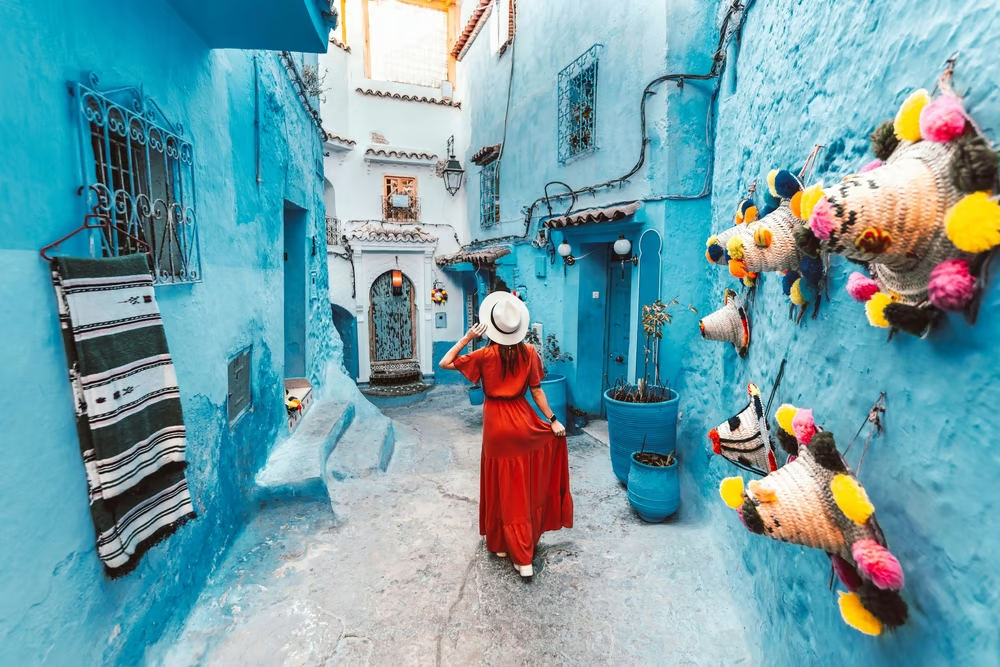

Morocco Travel Tips
Morocco Travel Tips: 35 Things to Know Before You Go
Planning your first trip? 35 essential Morocco travel tips on money, tipping, dress, transport, scams, Ramadan and the best time to visit.
TRAVSUS
· 阅读约 13 分钟
本文暂未提供你的语言版本,因此以英文显示。

Morocco delivers on every promise in the brochure: snow-capped Atlas peaks, rose-gold Sahara dunes, medinas that have barely changed in centuries and some of the warmest hospitality anywhere. It is also a place where a little preparation makes a huge difference. Knowing how the dirham works, how much to tip a driver or what to wear in a medina can turn a confusing first day into a confident, joyful trip.
As a Morocco-based private tour company, we have spent years driving travellers from Marrakech, Fes and Casablanca to Merzouga, over the High Atlas and through the imperial cities. These are the Morocco travel tips we share with every guest before they arrive – practical, honest and built around the questions people actually ask us.
Morocco at a Glance: Quick Facts
Capital: Rabat (Casablanca is the largest city and economic hub).
Currency: Moroccan dirham (MAD), a closed currency – roughly 10 dirhams to one euro or US dollar, give or take.
Languages: Arabic and Amazigh (Berber) are official; daily life happens in Darija; French is widely used, Spanish in the north, and English is growing fast.
Time zone: usually GMT+1, but clocks typically go back one hour during Ramadan.
Electricity: 220 V, 50 Hz, European two-pin plugs (types C and E).
Emergency numbers: Police 19, Royal Gendarmerie (outside cities) 177, ambulance and fire 15.
Best seasons: spring (March–May) and autumn (September–November).
Entry, Visas and Paperwork
1. Check visa rules with official sources only
Citizens of many countries – including the EU, the UK, the USA, Canada and Australia – have generally been able to enter Morocco visa-free for up to 90 days. Rules differ by nationality and can change, so check the Moroccan embassy or consulate in your country and your government's official travel advice before booking. Avoid third-party "visa service" sites that charge for forms you may not need.
2. Make sure your passport is in good shape
Your passport must be valid for your whole stay, and many governments recommend at least six months' validity and a blank page for the entry stamp. Keep a scan of the photo page on your phone; hotels and riads will ask for the original at check-in, as they must register guests.
3. Buy travel insurance that matches your plans
Private clinics in the cities are good but not free for visitors. Choose a policy covering medical treatment, evacuation and activities such as trekking in the Atlas, camel rides or quad biking.
Money: Dirhams, ATMs and Cards
4. The dirham is a closed currency
You cannot legally take significant amounts of dirhams in or out of the country, so you will not find them at home. Exchange money on arrival at the airport, at banks or at official bureaux de change, which usually offer fair, regulated rates. Keep your receipts: they help you convert leftover dirhams back before flying home.
5. ATMs are easy to find in towns and cities
Cash machines are everywhere in Marrakech, Fes, Casablanca, Rabat and Tangier. Withdrawals are often capped at around 2,000–4,000 dirhams per transaction, and your bank may add fees, so fewer, larger withdrawals are usually cheaper. Use ATMs attached to bank branches during opening hours in case one keeps your card.
6. Cards work in hotels – cash rules everywhere else
Visa and Mastercard are accepted in most hotels, larger restaurants and supermarkets. In souks, small cafés, taxis, villages and the desert, cash is king – and ATMs become scarce as you head south, so withdraw enough in a larger town.
7. Carry small notes and coins
Breaking a 200-dirham note for a 10-dirham mint tea can be tricky. Keep coins and 20- and 50-dirham notes for taxis, tips, toilets, parking attendants and snacks.
Tipping Guide: How Much to Tip in Morocco
8. Tipping is part of the culture – budget for it
Tipping is expected for good service and is an important part of income for many people in tourism. These are approximate guidelines in dirhams, not rules:
Cafés: round up or leave a few dirhams.
Restaurants: around 10% if service is not included.
Licensed city guides: roughly 100–200 MAD per group for a half day, more for a full day.
Private drivers on multi-day tours: commonly around 100–200 MAD per day from the group.
Desert camp staff and camel handlers: about 50–100 MAD per person, often via a shared tip box.
Porters and bag carriers: about 10–20 MAD per bag.
Hammam attendants: around 20–50 MAD for a scrub, more in upscale spas.
Parking or toilet attendants and small favours: 2–10 MAD.
Tip discreetly and with a smile. If someone offers help you did not ask for, you are not obliged to pay – but a small tip is normal if you accept the service.
SIM Cards and Internet
9. Get a local SIM card or an eSIM
Maroc Telecom, Orange and inwi all sell cheap prepaid data. SIM cards are often handed out in airport arrival halls, and recharge cards are sold in corner shops everywhere; bring your passport, as SIMs must be registered. Coverage is excellent in cities and along main roads, and surprisingly good in much of the desert, but expect gaps in deep gorges. An international eSIM bought before you travel is another easy option.
10. Keep Wi-Fi expectations realistic
Most riads offer free Wi-Fi, but thick earthen walls can weaken it, and desert camps may have little or no internet. Download offline maps of the medinas before you go – GPS works even when the alleys feel impossible.
Languages and Useful Darija Phrases
11. Know which languages you will hear
Moroccans are famously multilingual. You will hear Darija, the Moroccan dialect of Arabic, and Amazigh languages, especially in the mountains and the south. French appears on menus and signs, and English is now common in tourism. Still, a few words of Darija open hearts instantly.
12. Learn a handful of Darija phrases
Salam alaykum – Hello (peace be upon you). The reply is wa alaykum salam.
Shukran – Thank you. Shukran bzaf – Thank you very much.
La, shukran – No, thank you. Your most useful phrase in the souks.
Bshhal? – How much?
Wakha – OK.
Smeh li – Excuse me, sorry.
Mezyan – Good, nice.
Bslama – Goodbye.
Inshallah – God willing; you will hear it whenever plans are discussed.
Etiquette and Local Culture
13. Use your right hand
The right hand is used for eating, passing food, giving money and shaking hands. When sharing a tagine, eat from the section in front of you, using bread as your spoon.
14. Take time over greetings
Jumping straight into a request can seem abrupt, so start with a greeting and a little small talk. Handshakes are common between men; between men and women, let the woman decide whether to offer her hand. Touching your heart after a handshake is a warm gesture you can return.
15. Most mosques are closed to non-Muslims – with exceptions
Non-Muslims generally cannot enter active mosques in Morocco, even if a door is open. The great exception is the Hassan II Mosque in Casablanca, one of the largest in the world, which offers guided tours outside prayer times. You can also visit former Koranic schools such as the Ben Youssef Madrasa in Marrakech and the Bou Inania and Al Attarine madrasas in Fes, as well as the restored Tin Mal mosque in the High Atlas.
16. Dress modestly and comfortably
Morocco is fairly relaxed, but modest dress is appreciated and will make you more comfortable, especially in medinas and villages. Men and women do well to cover shoulders and knees; loose trousers, midi skirts and light long-sleeved shirts are ideal, and a scarf helps with sun, dust and religious sites. Keep swimwear for the pool or beach, and pack warm layers for desert and mountain nights.
17. Keep public affection low-key
Holding hands is fine, but kissing in public is frowned upon. Keep your voice down near mosques and in residential lanes, where families live right behind the walls.
Bargaining and Shopping
18. Bargain with good humour
Haggling is expected in souks, but it is a social game, not a battle. Decide what an item is worth to you, counter with a reasonable offer and meet in the middle – and only negotiate if you genuinely intend to buy. Fixed-price cooperatives for argan oil, ceramics and crafts are perfect if you prefer not to bargain.
19. Beware of "free" detours to shops
If a stranger offers to lead you to a tannery, a "Berber market open only today" or around a "closed" street, you are probably being steered to a shop that pays commission. A polite la, shukran and walking on confidently usually ends it.
Photography Etiquette
20. Always ask before photographing people
Many Moroccans, particularly women and older people, prefer not to be photographed. Always ask first and accept a "no" gracefully. Performers and water sellers in places like Jemaa el-Fna expect a small payment for photos. Avoid photographing police, military sites and government buildings.
21. Leave the drone at home
Drones are tightly regulated and generally require prior authorisation; travellers arriving with one may have it held at customs. Unless you have official permission, don't bring it.
Food and Water
22. Drink bottled or filtered water
City tap water is treated, but most visitors stick to bottled or filtered water to avoid upset stomachs; a filter bottle cuts plastic waste. Mint tea, made with boiled water, is always safe – and very sweet unless you ask for bla sukar (without sugar).
23. Eat boldly but wisely
Moroccan food is a highlight: slow-cooked tagines, Friday couscous, harira soup, pastilla, grilled brochettes and msemen pancakes at breakfast. Choose busy places with high turnover, favour freshly cooked hot food and peel your fruit. Carry rehydration sachets just in case.
Religion and the Calendar: Ramadan, Fridays and Alcohol
24. Travelling during Ramadan is rewarding – with adjustments
During Ramadan, Muslims fast from dawn to sunset. The dates follow the lunar calendar and move about 11 days earlier each year; in 2027 Ramadan is expected to begin in early February. Travelling then is perfectly possible and the evening ftour, when families break the fast, has a wonderful atmosphere. Expect shorter opening hours, some cafés closed by day outside tourist areas and lively streets at night. Out of respect, avoid eating, drinking or smoking openly in public during daylight.
25. Friday is the holy day
The Friday midday prayer is important, and some shops and souk stalls close for a few hours around lunchtime. Families traditionally share couscous after prayers, making Friday the best day to order it. Plan shopping for the morning or late afternoon.
26. Alcohol is available, but discreetly
Alcohol is sold in licensed hotels, bars and restaurants and in some large supermarkets in the new towns, and Morocco produces its own wine and beer. It is rare inside medinas, and many traditional restaurants do not serve it. Drinking in public is not acceptable.
Getting Around Morocco
27. Trains are comfortable and good value
The national railway, ONCF, links Tangier, Rabat, Casablanca, Fes, Meknes, Marrakech and Oujda. Africa's first high-speed train, Al Boraq, connects Tangier with Rabat and Casablanca in a little over two hours. First class is affordable and worthwhile on long routes. Note that trains do not reach the Sahara, the Atlas valleys or the southern oases.
28. Long-distance buses fill the gaps
CTM and Supratours run comfortable coaches between cities and to places such as Ouarzazate, Essaouira, Chefchaouen and Merzouga. Book ahead in busy seasons and expect a small luggage fee.
29. Understand petit taxis, grand taxis and ride apps
Petit taxis are small, colour-coded city cabs carrying up to three passengers within town. They should use the meter (compteur); if the driver refuses, agree a price before getting in or take the next one, and expect higher night rates. Grand taxis are larger shared cars between towns that leave when full – or you can pay for every seat. Apps such as Careem and inDrive work in some cities, though their legal status has been uncertain.
30. Think twice before driving yourself
Main roads and motorways are generally good, but city traffic is chaotic, police checkpoints and speed controls are frequent, and mountain passes such as the Tizi n'Tichka demand concentration. An International Driving Permit is often recommended, and night driving in rural areas is best avoided. For a first trip, many travellers find a private driver far more relaxing.
Guides, Scams and Safety
31. Hire licensed guides and recognise common scams
Official guides carry a licence and can be booked through riads and reputable tour companies; in a maze like Fes el-Bali they are worth every dirham. Common tricks include unofficial "guides" who attach themselves to you, people insisting a street is closed, henna artists who start before you agree and taxi drivers who "forget" the meter. None is dangerous; a clear, friendly refusal is usually enough.
32. Morocco is generally safe – use normal city sense
Most visits are trouble-free and violent crime against tourists is uncommon. Pickpocketing happens in crowds such as Jemaa el-Fna, so keep valuables zipped away. Women may get unwanted comments; confident body language and ignoring catcalls work best, and local women and families are often quick to help. Check your government's latest advice before departure.
Where to Stay: Riads, Kasbahs and Desert Camps
33. Choose your accommodation for the experience
A riad is a traditional house built around an inner courtyard, hidden behind a plain medina door – peaceful, intimate and often beautifully decorated. A kasbah is a fortified earthen building typical of the south and the Atlas, many now atmospheric hotels overlooking palm groves. In the Sahara, a desert camp ranges from simple nomad-style tents to luxury camps with private bathrooms and candlelit dinners. Medina riads are often reached on foot, so pack a bag you can carry a short way.
Practical Essentials
34. Pack the right adapter and a small health kit
Sockets are European two-pin (types C and E) at 220 V. No vaccinations are generally mandatory for most travellers, but see a travel clinic a few weeks before departure. Bring sunscreen, a hat, prescription medicines in original packaging and something for stomach upsets. Pharmacies, marked with a green cross, are excellent. Planning to climb Toubkal, North Africa's highest peak at about 4,167 m? Allow time to acclimatise.
When to Go and How Long to Stay
35. Pick the right season and give yourself enough time
Spring and autumn offer the most comfortable temperatures nationwide. Summer can be extremely hot inland – Marrakech, Fes and the desert regularly pass 40°C – while the coast stays fresh. Winter brings sunny days, snow on the Atlas and very cold desert nights.
A week lets you see Marrakech and loop to the Sahara via the Atlas and the Dades Valley. Ten days to two weeks allows a classic circuit of Casablanca, Rabat, Chefchaouen, Fes, Merzouga and Marrakech without rushing. Distances are long – Fes to Merzouga is a full-day drive – so build in a few slow days.
Frequently Asked Questions About Travelling to Morocco
Is Morocco safe for first-time travellers?
Yes, Morocco is generally a safe and welcoming destination. The main annoyances are persistent touts, petty theft in crowds and taxi overcharging, all manageable with the tips above. Always check current official travel advice.
What should women wear in Morocco?
There is no strict dress code for visitors, but loose clothing covering shoulders and knees is respectful and comfortable. Headscarves are not required, though covering your hair is appreciated when visiting the Hassan II Mosque.
How much cash should I carry in Morocco?
Many travellers find that 300–500 MAD per person per day covers taxis, snacks, tips and small purchases, with larger costs paid by card. Take more for souk shopping or rural areas where ATMs are rare.
Is it OK to visit Morocco during Ramadan?
Absolutely. Hotels, tourist restaurants and sights stay open, and evenings are festive. Expect reduced daytime hours and avoid eating or drinking openly in public during the day.
How many days do I need in Morocco?
Seven days is the minimum for Marrakech plus a Sahara trip; ten to fourteen days is ideal for a first tour of the imperial cities, the Atlas and the desert.
Do I need a guide in Morocco?
Not to travel, but a licensed guide in Fes or Marrakech saves time, avoids hassle and adds history you would never discover alone. For the desert and the Atlas, a private driver-guide makes long distances easy.
Explore Morocco Your Way with Travsus
Now the best part begins: actually going. At Travsus, we design private Morocco tours around you – from three-day Sahara adventures departing Marrakech or Fes to imperial-city circuits from Casablanca, Atlas escapes and tailor-made itineraries for families, couples and small groups. Enjoy your own experienced driver, a comfortable air-conditioned vehicle, handpicked riads, kasbahs and desert camps, and the freedom to stop wherever a view or a glass of mint tea calls you.
We are local, we know every road between the medinas and the dunes, and we would love to share our country with you. Contact Travsus to start planning your private Morocco tour – and put these travel tips to good use.
- Morocco Travel Tips
- First Time in Morocco
- Travel Guide
- Morocco Culture