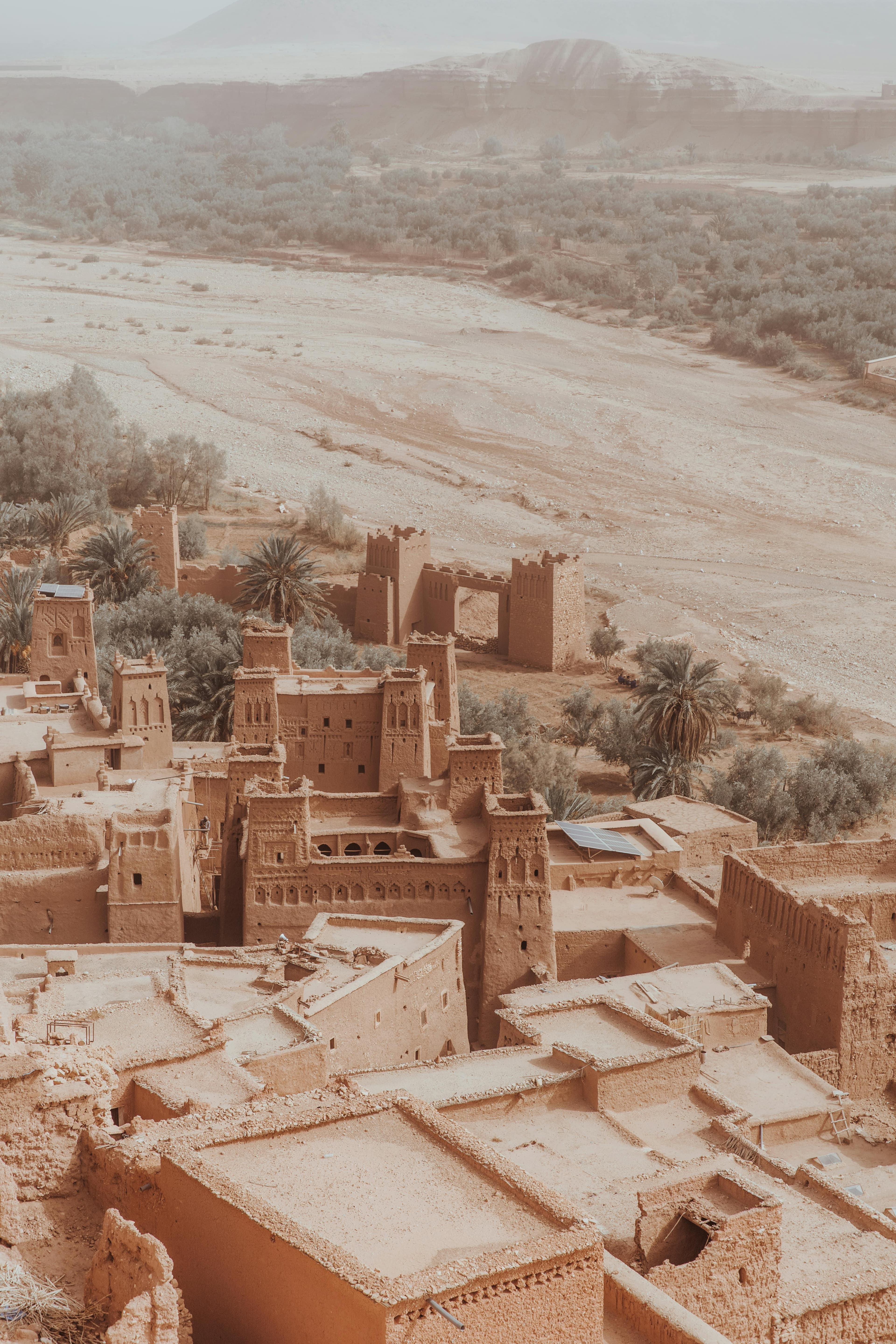

Ait Ben Haddou
Ait Ben Haddou & Ouarzazate: Complete Visitor Guide
Plan your visit to Ait Ben Haddou and Ouarzazate: the UNESCO ksar, film studios, kasbahs, Skoura, the Tichka pass, best time, where to stay and FAQs.
TRAVSUS
· 14 min read
Few places in Morocco look as much like a film set as Ait Ben Haddou — and that is partly because it has been one, again and again. Rising in tiers of red-gold earth above a shallow river, this fortified village on the southern side of the High Atlas is one of the most photographed sights in the country. Just half an hour away, the town of Ouarzazate sits at the gateway to the desert, surrounded by kasbahs, palm groves, film studios and one of the largest solar power complexes on Earth.
This guide covers the history of the ksar, how to visit it step by step, what to see around Ouarzazate, the drive from Marrakech, where to stay, the best time to go and how to continue towards the Sahara.
Ait Ben Haddou at a Glance
What it is: a ksar — a fortified village of earthen houses, towers and alleys — on the bank of the Ounila River.
Status: UNESCO World Heritage Site since 1987.
Location: about 30 km northwest of Ouarzazate and roughly 190 km southeast of Marrakech.
Drive from Marrakech: around 4 hours via the N9 road and the Tizi n'Tichka pass (about 2,260 m), without long stops.
Time needed: 1.5 to 2 hours to explore the ksar; a full day to combine it with Ouarzazate; ideally one night in the area.
Entry: walking into the ksar is generally free; some families charge a small fee to visit their homes.
Best seasons: spring (March to May) and autumn (September to November).
Famous for: films and series such as Gladiator and Game of Thrones.
A Short History of Ait Ben Haddou
For centuries, the trans-Saharan caravan routes linked sub-Saharan Africa with Marrakech and the Mediterranean. Gold, salt, dates, spices and other goods moved north and south across the desert and the mountains, and the valleys south of the High Atlas became vital corridors. Ait Ben Haddou grew up along one of these routes, controlling the passage between the Draa Valley region and the Tizi n'Telouet pass towards Marrakech.
The ksar is a classic example of southern Moroccan earthen architecture. Its houses are built from pisé (rammed earth) and mud brick, with wooden beams, reed ceilings and decorated towers. Some buildings are modest dwellings, while others are small kasbahs with corner towers that belonged to wealthier families. At the summit stands an agadir, a collective fortified granary where the community once stored its grain and valuables in times of trouble.
Although the earliest buildings are thought to be several centuries old, earthen architecture needs constant repair, so most of what you see today was rebuilt and maintained over generations. In the twentieth century, as the caravan trade disappeared and new roads were built, most families moved across the river to the modern village, where electricity and water were easier to access. Today only a handful of families still live inside the old ksar, often running small shops, cafés or rooftop terraces for visitors.
UNESCO inscribed Ait Ben Haddou on the World Heritage List in 1987 as an outstanding example of a southern Moroccan ksar.
Ait Ben Haddou on Screen
Ait Ben Haddou's dramatic silhouette and its proximity to the studios of Ouarzazate have made it a favourite of filmmakers for decades. The village and its surroundings have appeared in major productions including Gladiator, The Mummy and Kingdom of Heaven, and it was used as a filming location for Game of Thrones, standing in for cities across the sea in the world of Essos.
How to Visit Ait Ben Haddou
Crossing the River
The ksar sits on the other side of the Ounila River. There are two ways across:
The footbridge: a pedestrian bridge connects the modern village with the old ksar and is the easiest option all year round.
Stepping stones or sandbags: when the water is low, you can cross further downstream on stones or sandbags. Locals sometimes offer a hand, or even a donkey ride, in exchange for a tip. After heavy rain or snowmelt the river can rise quickly, so use the bridge if in doubt.
Entry to the Ksar and the Houses
The public alleys of Ait Ben Haddou are open to all, and entry to the site itself is generally free. However, some of the families who still own houses inside invite visitors to see the traditional interior — the courtyard, the kitchen, the storage rooms and the roof terrace — for a small fee, typically in the range of 10 to 30 MAD per person. It is a worthwhile way to understand how people actually lived here, and the money supports the residents who keep the buildings alive.
You may be approached by people offering to guide you. A licensed local guide can add a lot of context about the architecture, the caravan history and the film shoots. Agree on the price before you start; around 100 to 200 MAD for a tour of an hour or so is a common range.
Climbing to the Granary at the Top
The highlight of any visit is the climb to the agadir, the ruined granary on the hilltop. The path zigzags up through the alleys and then over rocky steps; allow 15 to 30 minutes at a relaxed pace. The effort is rewarded with a panoramic view: the ksar tumbling down towards the river, the green ribbon of gardens along the valley, the stony desert plains and, on clear days, the snowy peaks of the High Atlas on the horizon.
The final section is uneven and has no railings, so wear shoes with a good grip and take care in windy conditions. There is little shade on the way up, so carry water and avoid the midday heat in summer.
Sunrise and Sunset
Ait Ben Haddou is at its most beautiful in low light. At sunset, the earth walls glow orange and pink, and the view from the hilltop granary or from the terraces across the river is unforgettable. At sunrise, the ksar is almost empty: the tour buses from Marrakech have not yet arrived, and you can wander the alleys in near silence. Both are only really possible if you spend a night in the area — one of the best arguments for an overnight stay.
Ouarzazate: The Door of the Desert
Ouarzazate is a calm, spacious town of wide avenues and pinkish buildings, often called the "door of the desert". It is a convenient base, with banks, restaurants and plenty of accommodation.
Taourirt Kasbah
In the heart of town, the Taourirt Kasbah is one of the most impressive earthen buildings in southern Morocco. It was a stronghold of the Glaoui family, the powerful lords who dominated the southern Atlas in the late nineteenth and early twentieth centuries. Part of the complex has been restored and can be visited: you wander through a maze of rooms, courtyards and narrow staircases, with some finely painted ceilings and carved plaster in the reception rooms. Entry is inexpensive, usually around 20 to 30 MAD.
Atlas Studios and CLA Studios
Ouarzazate is sometimes called the "Hollywood of Africa" or "Ouallywood" because of its film studios. The best known, Atlas Studios, lies on the road towards Ait Ben Haddou and is easy to spot thanks to its Egyptian-style entrance. Guided tours take you through sets that have been used in many international productions: temples, palaces, a fake medina and assorted props. Tickets are usually in the range of 80 to 120 MAD.
CLA Studios is another large studio complex near the town, and some of its sets can also be visited depending on filming schedules.
Museum of Cinema
Opposite the Taourirt Kasbah, the small Museum of Cinema occupies a former studio building. Expect old cameras, costumes, props and decor from films shot in the region. It is modest, but a pleasant half-hour stop for film lovers, with a low entrance fee.
Noor Ouarzazate Solar Complex
East of town, in the stony desert, lies the Noor Ouarzazate solar complex, one of the largest concentrated solar power installations in the world. It combines several plants, including solar thermal technology with parabolic mirrors and a central tower, as well as photovoltaic panels, with a total capacity of roughly 580 megawatts. The complex is not a tourist attraction and is generally not open to casual visitors, but it is a striking sight from the road and a symbol of Morocco's investment in renewable energy.
Tifoultoute Kasbah
About 8 km west of the town centre, the Tifoultoute Kasbah stands on a rise above the Ouarzazate river, another former Glaoui residence. It is less visited than Taourirt and offers a lovely view over the valley and the oasis gardens.
Fint Oasis
Hidden among dark rocky hills roughly 15 km from Ouarzazate, the Fint Oasis is a small, peaceful palm grove with a river, gardens and a traditional village. The contrast between the black mountains and the green palms is remarkable. The access road is partly a track, so a 4x4 or an experienced driver is recommended.
Skoura Palm Grove and Amridil Kasbah
About 40 km east of Ouarzazate, on the road to the Dades Valley, the Skoura palm grove is a vast oasis of date palms, olive trees and small fields, dotted with old kasbahs. The most famous is the Kasbah Amridil, a beautifully preserved fortified house that has been in the same family for generations. Now a private museum, it displays traditional tools, kitchen utensils and furniture, and lets you climb to its towers for views over the palms. Entry is usually around 20 to 30 MAD.
The Drive from Marrakech over the Tizi n'Tichka
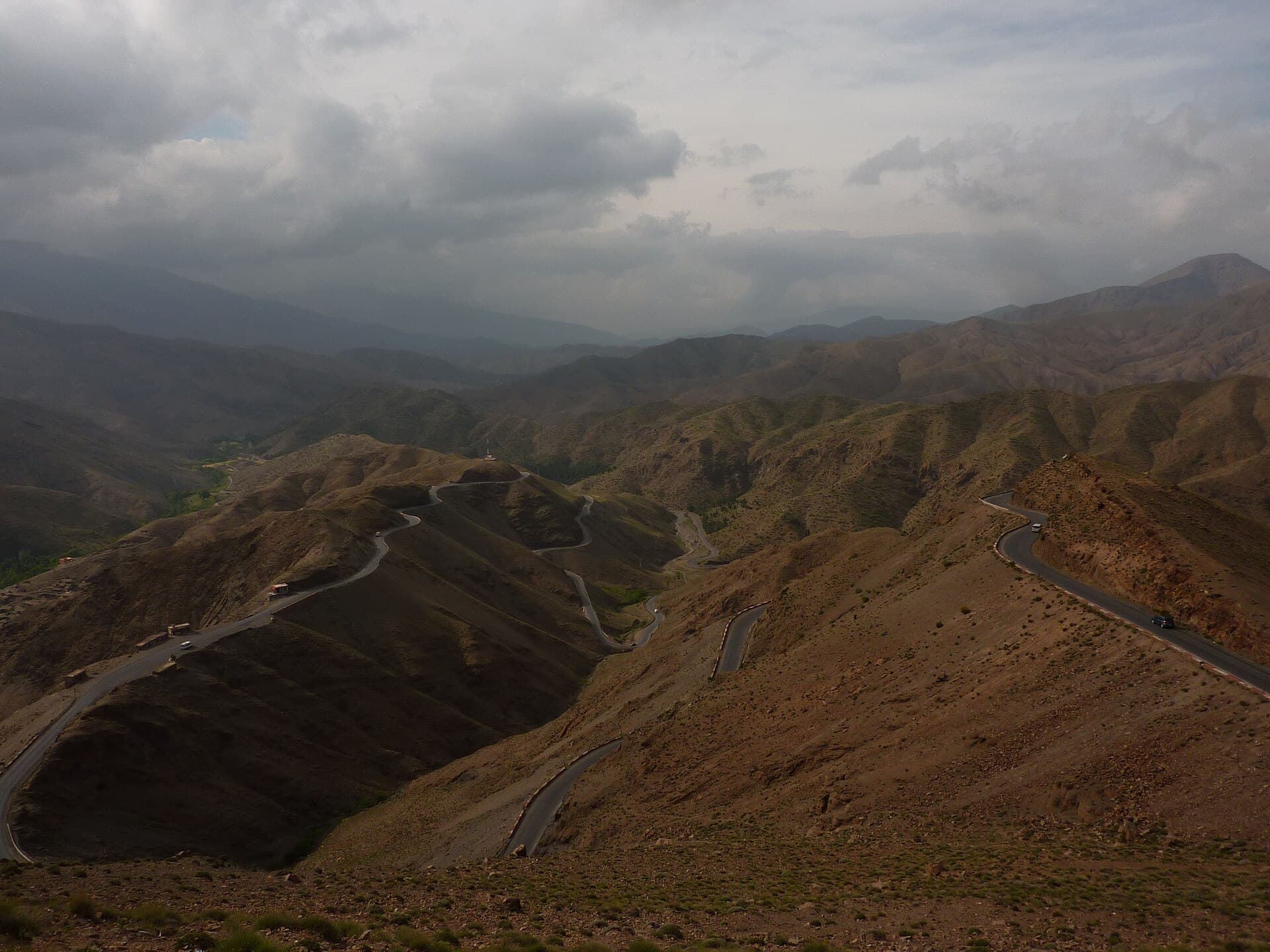
For most travellers, the journey to Ait Ben Haddou begins in Marrakech. The N9 road climbs into the High Atlas through the Zat valley, with views of red-earth villages, walnut trees and terraced fields. It reaches its highest point at the Tizi n'Tichka pass, at about 2,260 m, before descending towards the arid southern slopes. The total distance is about 190 km and the drive takes roughly 4 hours, but with photo stops, a tea break and lunch it easily becomes a full day.
The road is paved and has been widened in many places, but it is winding, and trucks are frequent. In winter, snow can occasionally close the pass for a few hours.
Detour to Telouet Kasbah
Just after the pass, a side road leads to Telouet, the former seat of the Glaoui family. Its kasbah is partly ruined from the outside, but some interior rooms keep extraordinary decoration: carved cedar ceilings, colourful zellige tiles and stucco work. From Telouet, a scenic road follows the old caravan route down the Ounila Valley, past villages, gorges and green gardens, all the way to Ait Ben Haddou. This route adds time but is one of the most beautiful drives in the region, and it lets you arrive at the ksar the way caravans once did.
Day Trip or Overnight?
A day trip from Marrakech to Ait Ben Haddou and Ouarzazate is possible and popular. It typically means leaving early in the morning, driving around 8 hours in total and spending a couple of hours at the ksar plus a short stop in Ouarzazate. It works if time is short, but you will see the ksar at its busiest.
An overnight stay transforms the experience. You can enjoy sunset and sunrise at Ait Ben Haddou, visit Telouet and the Ounila Valley on the way, explore Ouarzazate without rushing, and add Skoura or Fint the next day. Better still, include Ait Ben Haddou as the first stage of a multi-day journey to the Sahara, so the long drive becomes part of the adventure rather than a round trip.
Where to Stay: Kasbah Hotels and Guesthouses
One of the great pleasures of the region is sleeping in a kasbah hotel — a hotel built or restored in traditional earthen style, with thick walls that stay cool in summer, roof terraces, inner courtyards and often a pool. Typical options include:
Ait Ben Haddou village: guesthouses and kasbah hotels with direct views of the ksar, ideal for sunset and sunrise. Expect roughly 40 to 120 EUR per night for a double room with breakfast, depending on comfort.
Ouarzazate: the widest choice, from simple riads to large hotels with pools, often a little cheaper and convenient for exploring the town.
Skoura: peaceful boutique kasbahs and guesthouses in the palm grove, perfect for a slower, more rural experience; prices range from mid-range to luxury.
Food and Drink
The cuisine of the south is simple, generous and seasonal. Try a slow-cooked tagine of chicken with preserved lemon and olives, or lamb with prunes and almonds; a Berber omelette cooked in a small tagine with tomatoes and spices; a hearty couscous, traditionally served on Fridays; and harira soup. Local dates, almonds and olives from the oases make excellent snacks, and fresh mint tea is offered everywhere as a sign of hospitality.
Best Time to Visit
Spring (March to May): pleasant temperatures, green fields in the valleys and the rose harvest in nearby Kelaat M'Gouna in May. One of the best periods.
Summer (June to August): very hot, with daytime temperatures often above 35°C. Visit early in the morning and in the evening.
Autumn (September to November): warm days, clear light and the date harvest in the oases. Excellent for photography.
Winter (December to February): sunny days but cold nights, sometimes close to freezing, and possible snow on the Tichka pass. Fewer visitors and beautiful views of snowy mountains.
Practical Tips and Budget
Approximate Costs
Entry to the ksar: generally free; house visits around 10 to 30 MAD.
Local guide at Ait Ben Haddou: around 100 to 200 MAD.
Taourirt Kasbah, Amridil Kasbah, Museum of Cinema: roughly 20 to 30 MAD each.
Atlas Studios guided tour: roughly 80 to 120 MAD.
Meals: around 60 to 120 MAD for a main dish in a simple restaurant.
Kasbah hotel: roughly 40 to 120 EUR per night for a double, higher for luxury properties.
Prices change over time, so treat these figures as a guide only. Carry cash in dirhams, as many small businesses do not accept cards; there are ATMs in Ouarzazate.
What to Pack
Comfortable walking shoes with a good grip for the climb to the granary.
Sun hat, sunglasses and high-factor sunscreen.
A refillable water bottle.
Layers: a warm jacket for evenings, especially from November to March.
Small change for tips, house visits and tea.
Cultural Tips
Dress modestly, especially when visiting homes and villages: covered shoulders and knees are appreciated.
Always ask before photographing people, and accept a refusal graciously.
Remember that the ksar is still home to a few families: keep voices low and don't enter private doors without an invitation.
Continuing to Dades, Todra and Merzouga
Ait Ben Haddou and Ouarzazate are the natural first stop on the classic journey from Marrakech to the Sahara. From Ouarzazate, the "Road of a Thousand Kasbahs" leads east through Skoura and Kelaat M'Gouna, the valley of roses, to the Dades Valley and its gorge, known for its winding road and red rock formations — roughly 2.5 to 3 hours away. Continuing to Tinghir brings you to the Todra Gorge, where sheer limestone walls rise high above a narrow river. From there it is a few more hours to Merzouga and the great dunes of Erg Chebbi, where you can ride a camel at sunset and sleep in a desert camp.
A popular itinerary is a three-day trip from Marrakech: day one over the Tichka pass to Ait Ben Haddou, Ouarzazate and the Dades Valley; day two via the Todra Gorge to Merzouga and a desert camp; and day three back towards Marrakech or onwards to Fes.
Frequently Asked Questions about Ait Ben Haddou
Is Ait Ben Haddou worth visiting?
Yes. It is one of the best-preserved and most striking earthen villages in Morocco, a UNESCO World Heritage Site and a living reminder of the caravan trade. Combined with the drive over the High Atlas and the kasbahs of Ouarzazate, it makes one of the most rewarding excursions from Marrakech.
How long does it take to get from Marrakech to Ait Ben Haddou?
Around 4 hours by car for about 190 km, via the Tizi n'Tichka pass. With stops for photos, tea and lunch, plan for 5 to 6 hours.
Is there an entrance fee for Ait Ben Haddou?
Walking through the ksar is generally free. Some residents charge a small fee, often 10 to 30 MAD, to visit their traditional houses, and guides charge for their services.
Can you do Ait Ben Haddou as a day trip from Marrakech?
Yes, but it is a long day of around 8 hours of driving in total. Staying overnight lets you see sunset and sunrise and explore Ouarzazate and Telouet at a gentler pace.
Which films were shot at Ait Ben Haddou?
The ksar and its surroundings have featured in many productions, including Gladiator, The Mummy, Kingdom of Heaven and the series Game of Thrones.
Do people still live in Ait Ben Haddou?
Only a few families still live inside the old ksar. Most residents moved to the modern village across the river, but they continue to look after the houses, shops and terraces.
Discover Ait Ben Haddou with Travsus
At Travsus, we design private tours across Morocco from Marrakech, Fes, Casablanca and beyond, and Ait Ben Haddou is one of the places we love sharing most. Whether you want a full day trip over the Tizi n'Tichka, an overnight stay in a kasbah hotel with sunset over the ksar, or a multi-day journey through Ouarzazate, Skoura, the Dades and Todra gorges to the dunes of Merzouga, our team can tailor the route, the pace and the accommodation to your interests. Contact Travsus through our website to start planning your Ait Ben Haddou adventure.
- Ait Ben Haddou
- Ouarzazate
- Kasbahs
- Morocco Travel Guide